Best Roofing Materials for Solar Panels Compared
Quick Summary
The best roofing materials for solar panels are standing-seam metal, which allows clamp mounting without roof penetrations, and asphalt shingles, which are common and compatible with flashed attachments. Tile and flat roofs also work but need extra labor or structural checks. If your roof is near the end of its life, replacing it before installing solar avoids costly panel removal later.
- Standing-seam metal is often the easiest roof to pair with solar and minimizes penetrations.
- Asphalt shingles usually use flashed attachments, so flashing quality matters a great deal.
- Asphalt shingles 15 or more years old should be planned for replacement before or shortly after solar.
- Tile roofs need more installation work, adding labor and mounting cost.
- Replace a roof before solar if it has under about 10 years of life left.
Table of Contents
- Why Your Roofing Material Matters Before You Go Solar
- Standing-Seam Metal: The Strongest Option for Mounting Solar
- Asphalt Shingles: Common, Compatible, and Shorter-Lived
- Tile Roofs and Other Roof Types: Compatibility and Extra Mounting Costs
- How Solar Panel Roof Mounting Systems Attach to Your Roof
- Roof Replacement Before Solar Panels: When It Makes Sense
- Choosing Roof Direction and Your Next Step With Go Solar DMV
- Frequently Asked Questions
Why Your Roofing Material Matters Before You Go Solar
Last Updated: November 24, 2026
Choosing the best roofing materials for solar panels starts with one question: will the roof last as long as the panels do? Solar systems are typically designed to run for decades, so a roof that needs replacing in five years creates expensive work later.
Most roof types can accommodate panels. EnergySage identifies asphalt, metal, tile, tar, and gravel as workable options. That means the real decision is less about whether solar fits and more about how well the roof's condition, mounting method, and lifespan match your plans. A recommendation favoring one material should always be weighed against the roof you already have.
Roof condition matters most. ENERGY STAR guidance on rooftop solar and roof renovations advises that if a roof needs renovations, replacing it before solar installation avoids the cost and work of removing and reinstalling panels later. Below, we compare the main roofing materials, explain how mounting systems attach to each, and help you decide whether replacement should come first.
Standing-Seam Metal: The Strongest Option for Mounting Solar
Standing-seam metal is often the easiest roof to pair with solar. Mounting hardware can clamp to the raised seams, so installers can often avoid puncturing the roof.
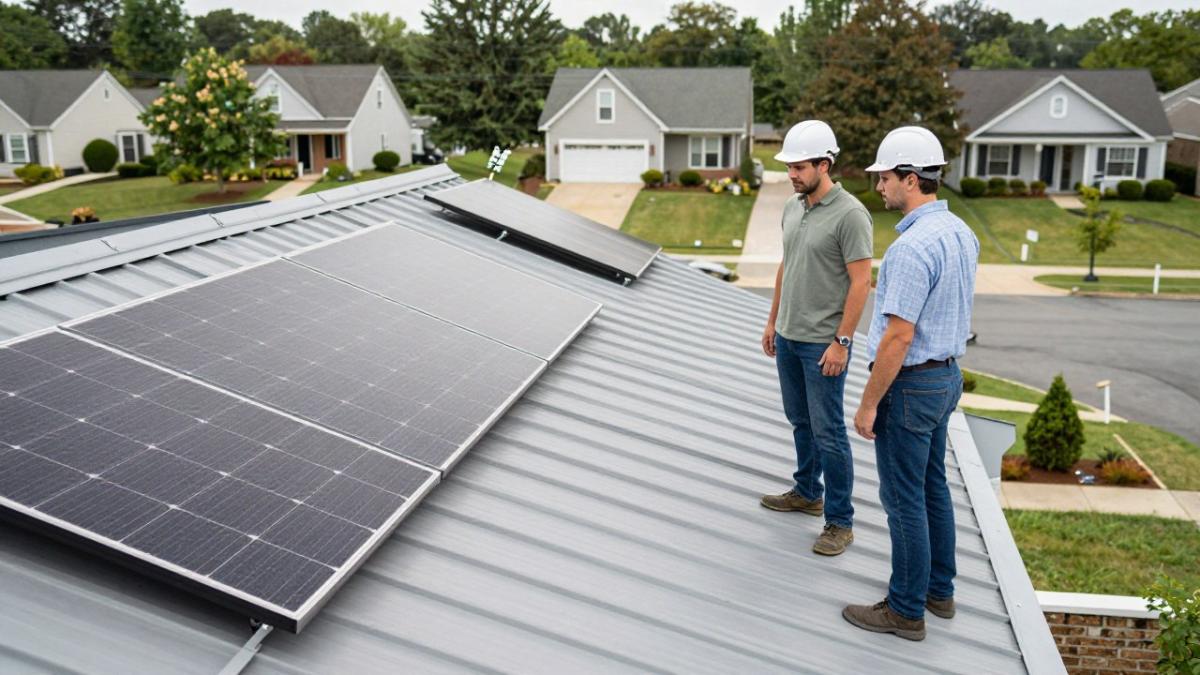
The tradeoff is cost and specialized hardware. Clamp systems are designed for specific seam profiles, so confirm the installer has experience with your exact roof type. Metal roofs also tend to outlast other options.
Best for: Homeowners who want a long-lived roof and minimal roof penetrations.
The article compares the main roofing materials and how well each suits solar mounting.
| Roof type | Mounting approach | Key tradeoff |
|---|---|---|
| Standing-seam metal | Clamps to raised seams | Cost and specialized hardware |
| Asphalt shingles | Flashed attachments through shingles | Lifespan and flashing quality |
| Tile | Extra labor during installation | More work and mounting cost |
| Flat, tar and gravel | Roof condition and load checked first | Load capacity and roof condition |
Asphalt Shingles: Common, Compatible, and Shorter-Lived
Asphalt shingles are the most common roof on pitched homes, and they work with solar. Mounting usually uses flashed attachments that pass through the shingles into the rafters, so the flashing quality matters a great deal.
The main concern is lifespan. If your shingles are already 15 or more years old, plan for replacement before or shortly after installing panels. Removing and reinstalling a solar array to replace a roof costs real money.
Skip if: Your roof is near the end of its life and you do not want to pay for a second project later.
Tile Roofs and Other Roof Types: Compatibility and Extra Mounting Costs
Tile roofs are compatible with solar, but they require more work during installation.
Flat roofs, including tar-and-gravel designs, can also host panels, but roof condition and load capacity must be checked first.
Expect extra labor on these roofs. Ask any installer how they will handle tile breakage and membrane protection before you sign.
How Solar Panel Roof Mounting Systems Attach to Your Roof
Mounting is where roofing material and solar hardware actually meet, and it is the part of the project most likely to cause a callback. Three attachment families cover nearly every residential job, and each one fails in a different place.
Clamp-on (standing-seam metal). Installers set L-foot brackets over the raised seam and tighten a clamp that grips the seam without drilling it. Because the seam is the attachment point, the clamp must match the seam profile and gauge, a clamp sized for a 1-inch mechanical seam will not seat correctly on a 1.5-inch snap-lock seam. The trade-off is hardware specificity: brackets, rails, and clamps are sold as a system, and mixing brands is where alignment problems start.
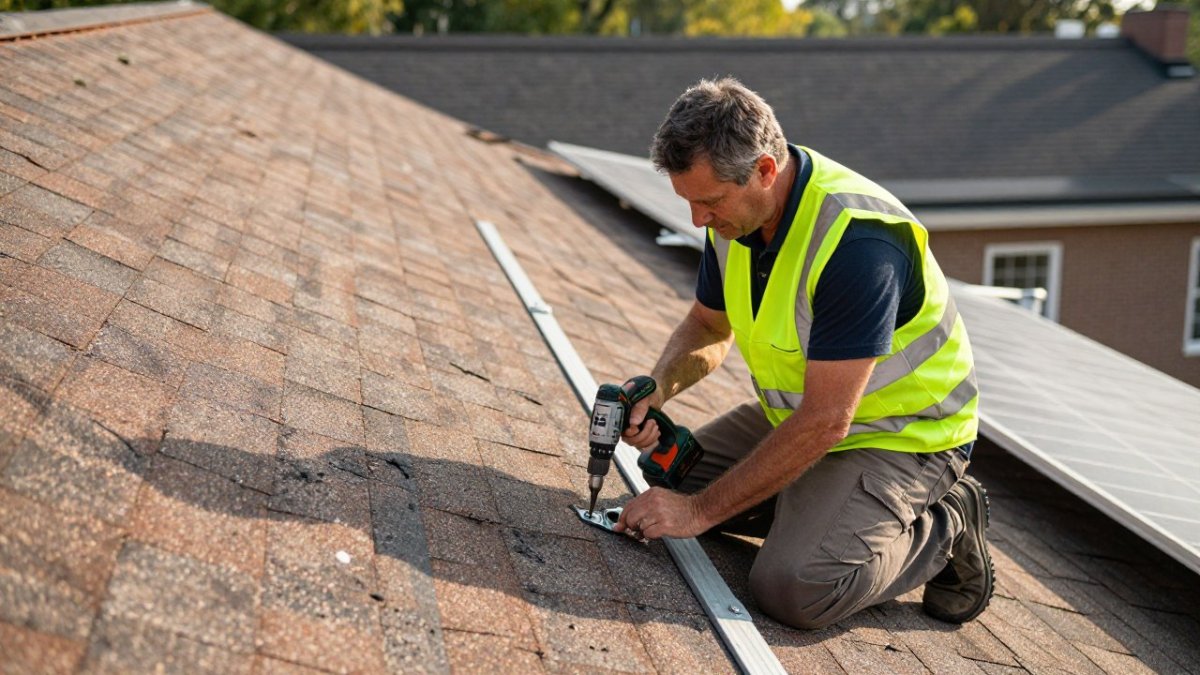
Flashed penetrations (asphalt shingles, tile, some metal). A lag bolt passes through the roofing into a rafter or truss, and a flashing plate or boot seals the hole. On asphalt, the correct sequence is to lift the course above the mount point, slide the flashing under it, and seal the fastener head, done in that order, the shingle above sheds water over the flashing rather than into it. On tile, installers typically replace a field tile with a flashed mounting block or use a hook that passes under the tile and over the underlayment, then restore the tile above. Tile work is slower and breakage-prone, which is why labor runs higher.
Ballasted (flat and low-slope). Trays or racks hold panels down with weight, concrete blocks, pavers, or ballast trays, and rely on the roof membrane staying intact. Ballasted systems need a structural check for dead load and a wind-uplift calculation, and they generally are not used on steep-slope roofs. On tar-and-gravel, installers also confirm the membrane is not at the end of its life, because ballast and foot traffic accelerate wear.
What to ask before signing. Request the mount count and a flashing detail for each penetration type, ask whether the installer uses a manufacturer-engineered flashing or a field-fabricated one, and confirm the structural assessment covers rafters, trusses, and the added snow and wind load for your area. Watch out: a verbal "we seal every hole" is not a flashing plan, ask to see the detail drawing for your specific roof.
Warranty responsibility should be written down for both the roof and the racking. Clarify in the contract who pays if a leak appears at a mount point, and whether the roofing manufacturer's warranty survives the penetrations.
Roof Replacement Before Solar Panels: When It Makes Sense
Most rankings stop at "replace an old roof first." The decision is really a lifecycle-cost question: compare the cost of reroofing now against the cost of reroofing later with a solar array in the way. That second number is the one homeowners underestimate.
The removal-and-reinstall problem. When a roof is replaced under an existing array, the crew must disconnect the system, remove the panels and racking, store them, complete the roof, then remount and reconnect. That is a second mobilization, a second set of penetrations or clamp points, and a period when the system is not producing. Add the risk of handling damage to panels and the possibility that the original racking no longer matches current hardware.
When replacing first wins. Replace before solar if the roof has less than about 10 years of expected life left, shows active leaks or soft decking, has multiple layers of shingles that would need to come off anyway, or is a material whose lifespan is shorter than the 25-year design life of the array. In those cases, reroofing first folds the roof cost into one project and avoids paying twice for labor.
When going solar first wins. If the roof is newer, dry, and structurally sound, install now and budget for maintenance.
The solar-ready option. If you are building or reroofing anyway, ask the roofer and the solar installer to coordinate on attachment points, conduit pathways, and a structural design that anticipates the array.
Insurance and warranty check. Confirm with your insurer how a roof-mounted array affects coverage, and confirm with the roofing manufacturer whether solar penetrations void or limit the roof warranty. Get both answers in writing before you choose the sequence. Watch out: a roofing warranty that excludes penetrations can leave you holding the cost of a leak even when the installer's workmanship warranty has expired.
Choosing Roof Direction and Your Next Step With Go Solar DMV
Roof direction affects how much energy your panels produce. South-facing roofs generally perform best in the DMV region, while west and east roofs can still work well with the right system design. Measuring your roof's sun exposure is the fastest way to know where you stand. The Solar Roof Score tool shows annual sun hours and usable roof area for each face of your roof.
Before you commit to a system, review your warranty terms. Our guide on solar panel warranties for financed systems explains what to check. If you are weighing whether to replace your roof first, our roof replacement decision guide walks through the steps. For a west-facing roof, our west-facing solar guide covers what production to expect.
Go Solar DMV offers a system installed and maintained at no cost, and tools including our AI Solar Advisor and quote comparison audit to help you compare proposals. Start with a roof assessment so your roofing and solar decisions line up.
Frequently Asked Questions
What type of roofing is best for solar panels?
Standing-seam metal is generally considered one of the best roofing materials for solar panels because mounting hardware can clamp to the raised seams without penetrating the roof surface. Asphalt shingles are also compatible and are the most common roofing material on pitched homes, though they typically have a shorter lifespan of roughly 12 to 30 years. Tile roofs can accommodate solar but usually cost more to mount on. Your roof's age, condition, and structure should guide the final choice, and a site assessment from a qualified installer can confirm compatibility.
Should you replace your roof before installing solar panels?
If your roof needs repairs or is near the end of its lifespan, replacing it before installing solar panels is usually the better choice. ENERGY STAR guidance indicates that replacing a roof needing renovations before solar installation can avoid the cost and labor of removing and reinstalling panels later. Solar panels typically last decades, so a roof that will need work within the next several years is a good candidate for replacement first.
Which roof direction is best for solar panels?
South-facing roofs generally receive the most sunlight in the Northern Hemisphere, making them generally the most productive direction for solar panels. West- and east-facing roofs can also perform well, while north-facing roofs usually produce the least energy. Roof pitch, shading from trees, and obstructions affect output as well, so a sun-exposure analysis can help estimate how a specific roof will perform.
