How Do You Check Solar Panel Eligibility in Virginia?
Last Updated: October 26, 2026
Quick Summary
Checking solar panel eligibility in Virginia starts with your roof, not a sales call: confirm roof orientation, shading, condition, and usable area, then pull 12 months of power bills to size the system. Next, confirm net metering and interconnection requirements with your electric utility, and review permits, HOA rules, and incentive requirements before signing.
- Walk your roof line at morning, noon, and late afternoon to note shade from trees, chimneys, and buildings.
- Pull 12 months of power bills and note your annual kilowatt-hour use for sizing.
- Virginia's Shared Solar Program under Code of Virginia § 56-594.3 lets eligible customers subscribe to a shared facility.
- James City County advises homeowners to contact zoning staff about conditions that may conflict with a solar proposal.
- Gather 12 months of power bills, proof of home ownership, roof records, HOA covenants, and two years of tax returns.
Table of Contents
- Start With Your Property: A Solar Panel Roof Suitability Assessment
- Check Virginia Net Metering Eligibility With Your Electric Utility
- Review Virginia Solar Interconnection Requirements Before You Sign
- Confirm Permits, HOA Rules, and Local Siting Conditions
- Match Your Situation to Virginia Solar Incentives and Tax Credits
- Federal Residential Clean Energy Credit: Ownership and Tax Liability
- Property Tax Exemption: A Local Process, Not an Automatic Benefit
- Shared Solar and Utility Programs: Separate Eligibility
- Financing and Ownership Structures Change Who Qualifies
- Eligibility Matrix: Who Confirms Each Requirement
- Documents to Gather Before You Apply
- Eligibility Documents to Gather and Edge Cases to Resolve
- Get a Property-Specific Eligibility Review From Go Solar DMV
- Frequently Asked Questions
Start With Your Property: A Solar Panel Roof Suitability Assessment
Checking solar panel eligibility in Virginia starts with your roof, not a sales call, and the same solar panel eligibility rules apply whether you own a townhome or a farmhouse. The average residential electricity rate in Virginia was 14.5 cents per kWh, according to EIA 2024 rate data cited by Palmetto, so a roof that can host panels is the first thing worth confirming. A beautiful quote means nothing if your roof fails the basics. Below are checks to consider, from shading to utility approval.
Roof Orientation, Shading, and Usable Area
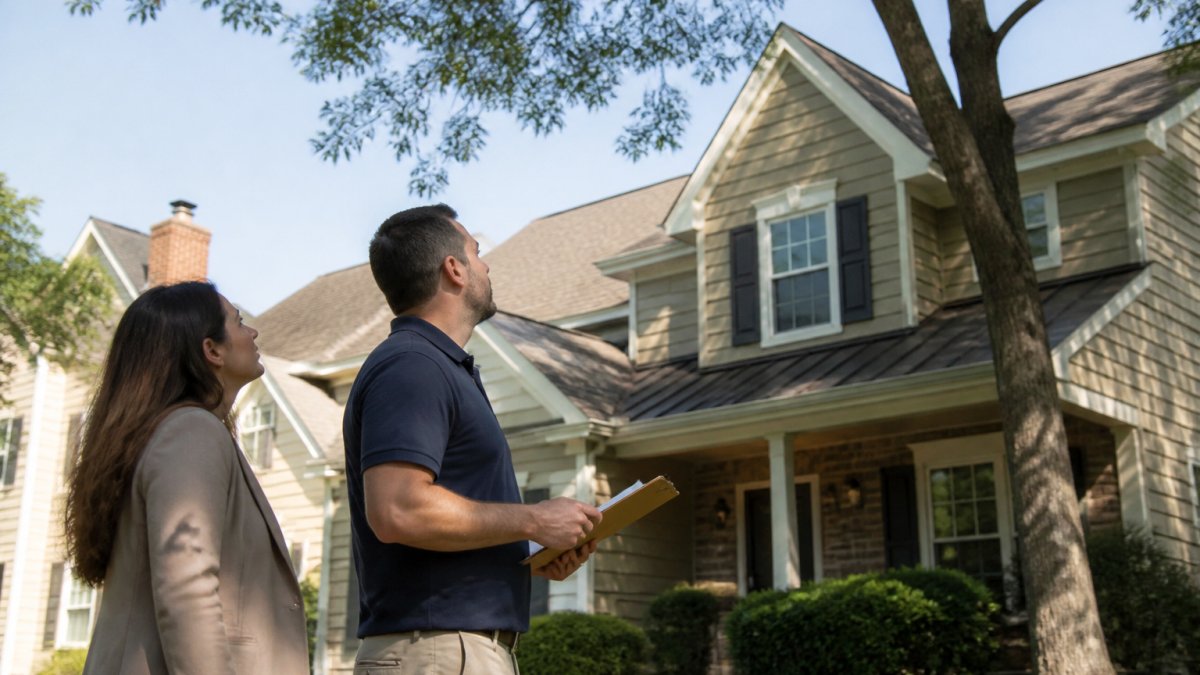
A south-facing roof with little shade is the simplest candidate; east and west roofs can still work. Shade is the deal-breaker most people underestimate, so walk your roof line at morning, noon, and late afternoon, noting trees, chimneys, and neighboring buildings. If afternoon shade covers the roof, read our guide on whether a shaded roof works for solar.
Roof Condition and System Sizing Against Your Electricity Usage
Age matters: a roof near the end of its life should be assessed before panels go up. Check for curling shingles, leaks, and sagging. Then pull 12 months of power bills and note your annual kilowatt-hour use.
Check Virginia Net Metering Eligibility With Your Electric Utility
Net metering eligibility in Virginia depends on the applicable utility rules and your circumstances. Check current requirements with your utility and the relevant official sources.
Step 1: Identify Your Utility Territory, Not Just Your Power Company
Start with the name printed on your bill.
Ask your electric utility for its current net-metering and interconnection requirements.
Confirm with your electric utility which requirements apply to your property.
Step 2: Confirm the System-Size Cap That Applies to You
Ask your utility which system-size requirements apply to your property and request the current requirements in writing.
Step 3: Understand How Export Credits Actually Work
Ask your utility how it handles exported electricity and what terms apply to your account. Those details can affect the financial analysis.
Step 4: Follow the Approval Sequence in the Right Order
Ask your utility what applications, approvals, inspections, and steps apply to your project.
Confirm applicable utility requirements before signing a construction contract.
Step 5: Get the Answers in Writing and Keep Them
Ask your utility for its current requirements and keep relevant written information with your system documents.
If your utility does not offer net metering or caps it tightly, shared solar may be the fallback. Virginia's Shared Solar Program, established under Code of Virginia § 56-594.3, lets eligible customers subscribe to a shared facility rather than roof-mount a system, per the Virginia Department of Energy. Eligibility for that program is also utility-specific, so confirm your territory participates before you count on it.
Review Virginia Solar Interconnection Requirements Before You Sign
Ask your utility what interconnection requirements apply to your project and clarify who is responsible for each step before signing.
Confirm Permits, HOA Rules, and Local Siting Conditions
Local rules can stop a project that looks perfect on paper. James City County advises homeowners to contact zoning staff about conditions that may conflict with a solar proposal, and HOA residents should review covenants, codes, and restrictions for siting requirements, per James City County's Going Solar guidance.
Some localities now use SolarAPP+, a free tool that lets them review and approve rooftop solar applications online, as described by the Weldon Cooper Center for Public Service.
If you live under an HOA, review its requirements before proceeding.
Match Your Situation to Virginia Solar Incentives and Tax Credits
Solar incentives and programs can have separate eligibility requirements. Learn how Virginia SRECs affect your eligibility and savings. Check the current requirements for each one that may apply.
Federal Residential Clean Energy Credit: Ownership and Tax Liability
Check current federal tax guidance or consult a tax professional to determine whether a credit applies to your circumstances.
Before making a tax-related decision, consult a tax professional about the documentation relevant to your circumstances.
Property Tax Exemption: A Local Process, Not an Automatic Benefit
Check with your locality or a qualified tax professional to determine whether any property-tax treatment applies to your circumstances.
Shared Solar and Utility Programs: Separate Eligibility
If your roof is unsuitable or your utility caps net metering tightly, shared solar is a different path with different rules. Virginia's Shared Solar Program under Code of Virginia § 56-594.3 lets eligible customers subscribe to a shared facility, per the Virginia Department of Energy. Eligibility depends on your utility territory, whether the program is open to new subscribers, and the subscription terms. Confirm participation and current availability with your utility before you count on it.
Financing and Ownership Structures Change Who Qualifies
Ownership and payment arrangements can affect which incentives may apply. Consult current official guidance or a qualified tax professional about your circumstances.
Go Solar DMV describes a system installed and maintained at no cost and stable electric rates for up to 25 years. Review any applicable terms and consult a tax professional about incentives.
Eligibility Matrix: Who Confirms Each Requirement
| Incentive or Program | Primary Eligibility Test | Who Confirms It | Document to Keep |
|---|---|---|---|
| Federal residential clean energy credit | Ownership plus federal tax liability | Tax professional, IRS Form 5695 | Itemized invoice separating solar costs |
| Local property tax exemption | Local ordinance and application | Commissioner of the revenue or assessor | Application and inspection sign-off |
| Net metering | Utility tariff and system size | Your electric utility | Written approval letter |
| Interconnection | Utility application and inspection | Utility plus installer | Permission-to-operate notice |
| Shared solar | Utility territory and program availability | Your electric utility | Subscription agreement |
| HOA and local permits | Covenants and zoning | HOA board and locality | Signed approvals |
Documents to Gather Before You Apply
Gather documents relevant to your property and circumstances before seeking guidance.
Edge cases deserve a closer look: a trust-owned home, a co-signed mortgage, a planned refinance, or a system installed before the property transfer can each change who claims which incentive. Dominion Energy notes that an installer's site analysis determines whether a property is eligible, so treat any general checklist as a starting point only, per Dominion Energy Virginia program guidance.
Eligibility Documents to Gather and Edge Cases to Resolve
Paperwork moves faster when you gather it early. Have these ready:
- 12 months of power bills
- Proof of home ownership
- Roof age and any recent repair records
- HOA covenants, if you have an HOA
- Last two years of tax returns for credit planning
Edge cases trip people up. A trust-owned home, a co-signed mortgage, or a planned refinance all need a closer look. Dominion Energy notes that an installer's site analysis determines whether a property is eligible, so treat any general checklist as a starting point only, per Dominion Energy Virginia program guidance.
Get a Property-Specific Eligibility Review From Go Solar DMV
General checklists cannot confirm your property. Go Solar DMV offers Google Project Sunroof 3D irradiance modeling, an AI Solar Advisor, 1:1 net metering tariffs, and quote comparison audits. Learn more about Go Solar DMV's solar guidance.
Frequently Asked Questions
How do I check whether my roof gets enough sunlight for solar?
Consider the roof's shading and orientation when assessing solar suitability. Go Solar DMV offers Google Project Sunroof 3D irradiance modeling.
Is there a tax credit available for solar panels in Virginia?
Check current official tax guidance or consult a qualified tax professional to determine whether any tax benefit applies to your circumstances.
How can I find out whether my utility offers net metering?
Ask your electric utility about current requirements and available options for your property before making a decision.
What permits or approvals are needed to install solar panels in Virginia?
Check with your locality, electric utility, and any applicable HOA about requirements for your property.
Eligibility is not the same as suitability, and neither one is the same as a good deal. Get all three checked before you sign anything. Go Solar DMV combines 3D roof modeling, utility-specific net metering data, and a quote comparison audit so you see the real numbers for your home. Get started with Go Solar DMV and lock in a stable electric rate for up to 25 years.
