Solar Installation Maintenance: Who Does What
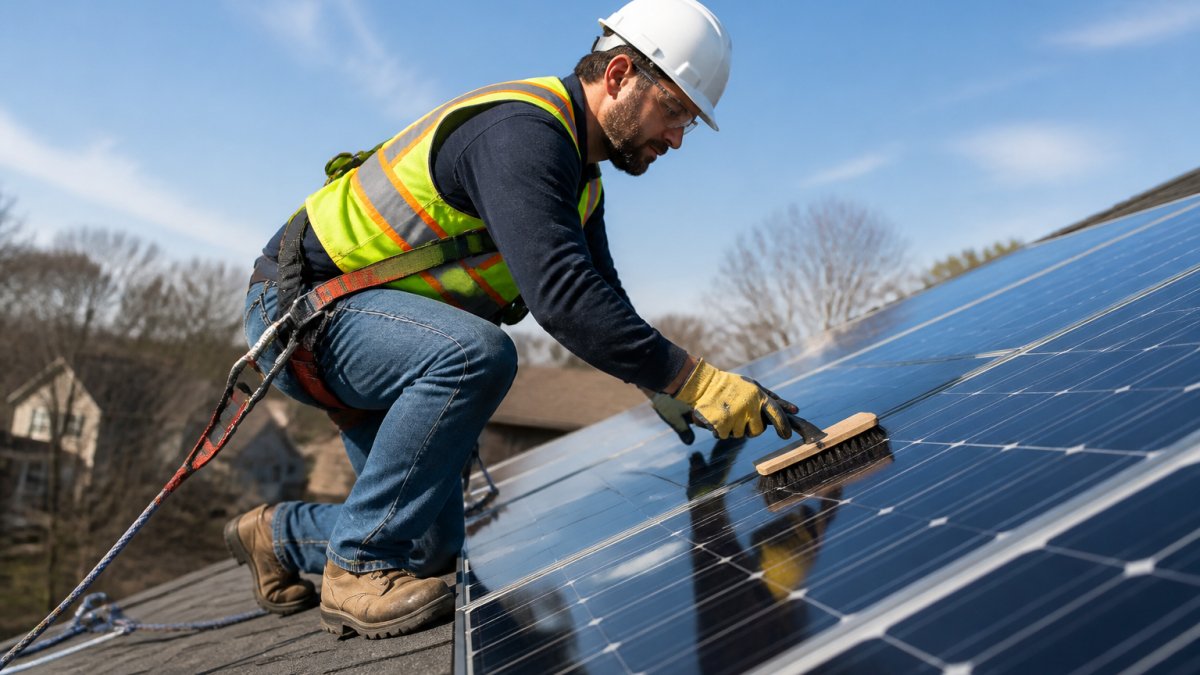
Table of Contents
- Understanding Solar Installation Maintenance Responsibilities
- What the Solar Installer Does During and After Installation
- Solar Panel Maintenance Schedule and Inspection Frequency
- Solar Panel Cleaning and Inspection: Homeowner vs. Professional Tasks
- Solar System Monitoring and Troubleshooting Responsibilities
- Solar Installation Warranty Coverage and Service Plans
- Safety Boundaries and When to Call a Professional
- Frequently Asked Questions
Last Updated: October 21, 2026
Understanding Solar Installation Maintenance Responsibilities
Solar installation maintenance isn't a single job, it's a shared responsibility split between the installer, the homeowner, and professional service providers. Who does what matters because it affects your system's performance, warranty coverage, and safety.
We help homeowners understand exactly where these lines are drawn. The installer gets your system running. You maintain it day-to-day. Service providers handle the complex work. Getting this right keeps your solar system producing energy reliably for 25+ years.
The key insight most homeowners miss: the installer's job ends after commissioning, but their work creates the foundation for everything that comes after. A well-installed system is easier to maintain. A poorly installed one becomes a constant headache.
What the Solar Installer Does During and After Installation
The solar installer's primary responsibility is getting your photovoltaic system properly mounted, wired, and tested so it actually works. This happens in phases.
During installation, the installer handles:
- Site assessment and hazard evaluation for roof safety
- Mounting system installation and panel placement
- Electrical wiring and inverter configuration
- Battery storage setup (if included in your system)
- Safety equipment testing and equipment inspection
- System commissioning and initial performance testing
After installation, the installer conducts a final walkthrough. They show you how to monitor your system, explain what normal performance looks like, and document everything in your warranty paperwork.
The installer also typically provides the first year of monitoring support. They'll respond if your system shows obvious faults during that period. But here's what changes after year one: most installer warranties cover defects in their work, not ongoing maintenance. That becomes your responsibility, or your service provider's, if you've signed a maintenance plan.
Solar Panel Maintenance Schedule and Inspection Frequency
A maintenance schedule is only useful if each task is assigned to someone.
| Cadence | Task | Responsible party | What to record |
|---|---|---|---|
| Monthly | Review monitoring app production and alerts | Homeowner | Daily kWh, any error codes, dates of anomalies |
| Monthly | Ground-level visual check for debris, shading, visible damage | Homeowner | Photos, date, location of issue |
| Quarterly | Clear leaves, branches, and light dust from ground level | Homeowner | Date and method used |
| Seasonally (spring/fall) | Check roof penetrations, racking, and conduit from ground level with binoculars | Homeowner | Photos of any corrosion, sagging, or loose hardware |
| Annually | Full electrical inspection, torque checks, inverter and battery service | Licensed technician or service provider | Service report, test readings, parts replaced |
| Annually | Performance review against expected production model | Installer or service provider | Comparison of actual vs. modeled output |
| After severe weather | Post-storm inspection for damage, debris, and water intrusion | Homeowner (visual) then professional if damage is suspected | Photos, date, description of storm |
| Every 5-10 years | Inverter replacement evaluation, battery capacity test | Service provider | Capacity test results, replacement recommendation |
Monthly (homeowner): Open your monitoring app and compare production to the same month last year. Note any day where output falls more than 20% below the rolling average for that season.
Seasonally (homeowner): In spring and fall, walk the perimeter of your home and look up at the array with binoculars.
After severe weather (homeowner then professional): Hail, high wind, and heavy snow are the events most likely to cause damage that is not immediately visible from the ground.
When to escalate beyond the schedule:
- Production drops more than 20% for more than three consecutive days without an obvious weather cause.
- The inverter or monitoring app shows a persistent error code.
- You see physical damage, corrosion, or loose wiring from the ground.
- You smell burning or see smoke near any system component.
- The system stops producing entirely.
Solar Panel Cleaning and Inspection: Homeowner vs. Professional Tasks
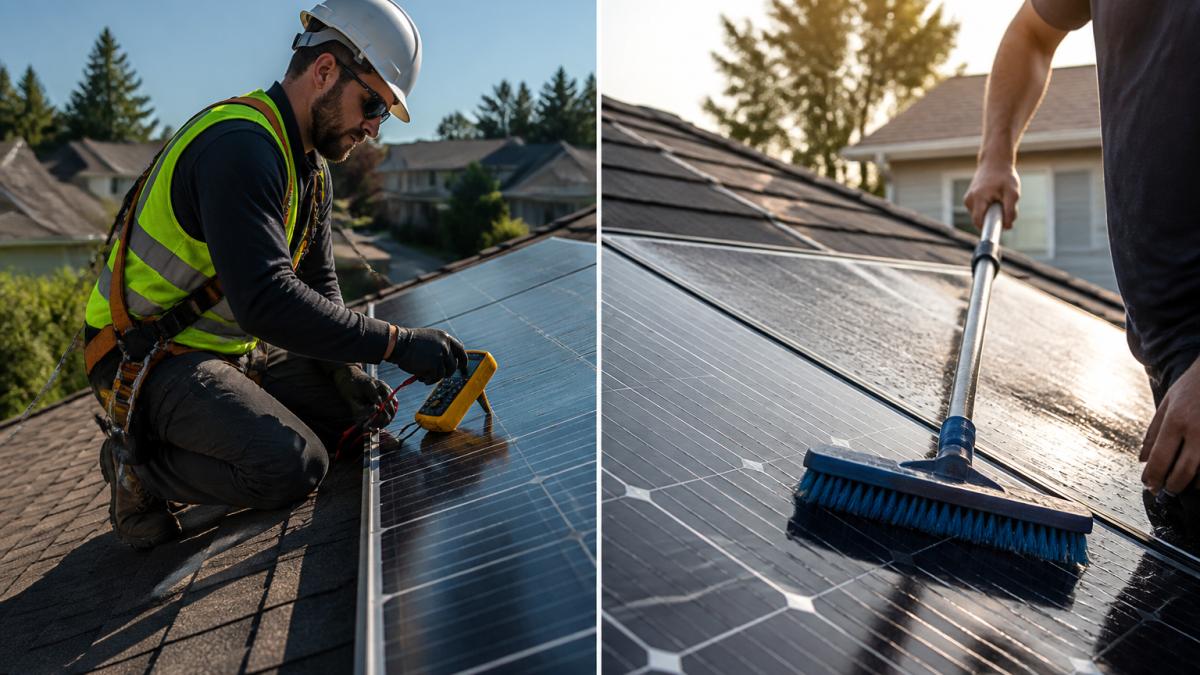
Cleaning your solar panels sounds simple, but it's more nuanced than you might think. Some cleaning is safe for homeowners. Most isn't.
What homeowners can safely do:
- Remove obvious debris (leaves, branches, light dust) from the ground level using a soft brush or gentle water spray
- Monitor your monitoring app for performance drops that signal cleaning is needed
- Take photos of your system for your records
- Report visible damage or loose components to your service provider
What requires a professional:
- Climbing on your roof (fall risk, roof damage risk)
- High-pressure washing (can damage panel coatings and seals)
- Electrical testing or component inspection
- Removing stubborn buildup or bird droppings
- Clearing heavy snow or ice
The boundary exists because of safety and warranty. Roof work requires personal protective equipment and training. Aggressive cleaning can void your panel warranty. A professional has insurance, proper equipment, and knows how to work safely around electrical systems.
Climbing on your roof to clean panels is a leading cause of homeowner injuries. Even experienced DIYers slip. One fall outweighs any savings from skipping a professional cleaning service.
Solar System Monitoring and Troubleshooting Responsibilities
Your monitoring system is your window into how your solar installation is performing. Most systems send real-time data to an app on your phone. You should check it monthly, not obsessively, but enough to notice drops in production.
What you monitor:
- Daily energy production (should match historical patterns)
- System status alerts (inverter errors, battery issues)
- Weather conditions affecting output (clouds, temperature)
- Cumulative energy over weeks and months
When production drops, start simple. Check for obvious shading from new tree growth or a neighboring building. Look for visible damage or debris. Then check your monitoring app for error codes.
Most modern inverters display error codes that tell you exactly what's wrong. An internet search for that code often gives you the answer. But don't stop there, if the error persists or you can't identify the cause, contact your service provider.
Solar Installation Warranty Coverage and Service Plans
Warranties and service plans are where maintenance responsibilities become financial. The same failed inverter can be a free replacement, a labor-only charge, or a full out-of-pocket repair depending on which contract applies. Understanding the four documents below prevents most billing surprises.
The four documents that govern who pays:
- Equipment warranty (manufacturer). Covers defects in panels, inverters, and batteries. Typically 10-25 years for panels and inverters, 10 years for many batteries. It usually covers the replacement part but not the labor to diagnose or swap it. Labor is often billed separately unless a service plan covers it.
- Workmanship warranty (installer). Covers defects in how the system was installed, such as roof penetrations, wiring, and racking. Typically 5-10 years. This is the warranty that responds if a leak appears at a mounting point or a connection fails because it was not torqued correctly.
- Performance warranty (manufacturer). Guarantees that panels will produce at least a stated percentage of their rated output over 25 years, typically around 80-87% by year 25. It is a production guarantee, not a maintenance contract, and claims usually require proof of proper maintenance.
- Service plan or maintenance agreement (installer or third party). An optional contract that covers routine inspections, cleaning, diagnostics, and sometimes labor for warranty repairs. Terms vary widely, so read the exclusions carefully.
How the documents interact in practice:
- If your inverter fails in year 4, the equipment warranty may supply a replacement unit, the workmanship warranty probably does not apply, and the labor to diagnose and install the new unit may fall to you unless a service plan covers it.
- If a roof leak appears at a mounting point in year 3, the workmanship warranty is the relevant contract, and the installer is typically responsible for the repair.
- If production falls below the performance guarantee, the manufacturer may require evidence of annual inspections and cleaning before honoring a claim. That is why the maintenance log matters.
Lease and power purchase agreement (PPA) responsibilities:
If you lease your system or buy power through a PPA, the third-party owner is generally responsible for maintenance, monitoring, and repairs, and those costs are built into your payment. Your responsibilities are usually limited to keeping the roof clear of debris, notifying the owner of damage, and providing access for service. Read the lease or PPA for the specific access and notification requirements, because missed notifications can shift costs to you.
What a service plan typically covers, and what it does not:
- Covered: annual inspection, diagnostic visits, monitoring alerts, cleaning (sometimes), labor for warranty part swaps (sometimes).
- Often excluded: battery replacement, physical damage from storms or animals, roof repair, and work caused by unauthorized modifications.
- Pricing models: flat annual fee, per-visit fee, or a bundled plan added at installation. Ask for the per-visit rate and the annual fee in writing before you sign.
Questions to ask before signing a service plan:
- Does it cover labor for equipment warranty replacements, or only the diagnostic visit?
- Is battery maintenance included, and at what interval?
- What is the response time for an alert, and is there an after-hours charge?
- Does the plan satisfy the annual inspection requirement in my workmanship warranty?
- Can I cancel, and what happens to the warranty if I do?
Safety Boundaries and When to Call a Professional
Not every maintenance task is yours to handle. Knowing the boundary keeps you safe and protects your system.
Stay off the roof. Period.
Roof work requires fall protection, proper footwear, and training. Your homeowner's insurance may not cover injuries from DIY roof work. The installer's insurance definitely won't.
Electrical work is off-limits.
Your solar system connects to your home's electrical panel and the grid. Touching live electrical components can kill you.
Battery work requires expertise.
If your system includes battery storage, maintenance is even more specialized. Batteries contain high-voltage DC power. Improper handling causes electrocution or fire.
When to call a professional:
- Error codes appear on your inverter or monitoring app
- Production drops more than 20% without obvious cause
- You notice physical damage (cracks, loose wiring, corrosion)
- You smell burning or see smoke
- Your system stops producing energy entirely
- Leaves or debris accumulate faster than you can safely remove from ground level
- Your annual inspection is due
The safest rule: if you're uncertain whether a task is safe, call a professional. A $200 service call is cheaper than an emergency room visit or a damaged system.
Solar installation maintenance responsibilities are clear once you understand the framework. The installer builds your system. You monitor it and handle light debris removal.
Our AI Solar Advisor and quote comparison tools help you evaluate installers and service plans before you commit.
Frequently Asked Questions
What maintenance do you have to do on solar panels?
Basic maintenance includes visual inspection for debris, dirt, or damage; cleaning panels if output drops; and monitoring system performance through your monitoring app. Most homeowners perform simple visual checks quarterly. Professional maintenance, such as electrical testing, inverter diagnostics, and roof-mounted component inspection, should be scheduled annually or per your warranty agreement. Specific tasks depend on your climate and system design.
Who is responsible for maintaining a solar panel system after installation?
Responsibilities are shared. The solar installer performs initial commissioning and system testing. You, as the homeowner, monitor daily performance and perform basic cleaning and visual inspections. Your service provider or installer handles annual professional inspections, inverter servicing, electrical testing, and component repairs covered under warranty. Your solar installation warranty coverage defines which party handles what maintenance and repairs during the coverage period.
How often should a solar system be inspected?
A professional solar panel maintenance schedule typically includes annual inspections by a qualified technician. Homeowners should perform visual checks quarterly and after severe weather. If your system uses battery storage, inverters, or advanced monitoring, your service plan may require semi-annual or seasonal inspections. Check your warranty documentation and service agreement for exact intervals, as requirements vary by equipment type and regional conditions.
Can homeowners clean solar panels themselves?
Yes, but with caution. You can perform basic, ground-level cleaning with a soft brush and water if your panels are easily accessible. Never climb on the roof or use pressure washers, which can damage seals and void warranties. If panels are roof-mounted or require electrical isolation, hire a professional. Most homeowners find that quarterly visual inspections catch issues early; annual professional cleaning during service visits is often more cost-effective and safer than DIY roof work.