7 Steps to Decide Roof Replacement Before Solar
Table of Contents
- 7 Steps to Decide Roof Replacement Before Solar
- Roof Replacement Before Solar Installation: The Core Decision
- How Much Remaining Roof Life Is Enough for Solar
- Roof Age, Material, and Condition: A Decision Tree
- Roof Replacement Before Solar Installation Cost Compared to Panel Removal Later
- Solar Panel Removal and Reinstallation for Roof Replacement: What to Expect
- What Happens to a Roof When Solar Panels Are Removed
- Booking Your Roof and Solar Coordination With Go Solar DMV
- Frequently Asked Questions
7 Steps to Decide Roof Replacement Before Solar
Last Updated: November 5, 2026
Roof Replacement Before Solar Installation: The Core Decision
Go Solar DMV helps homeowners across Virginia, Maryland, and Washington D.C. decide whether a roof should be replaced before panels go up. The answer depends on roof condition and remaining life, not on a rule that every roof must be replaced. A roof with limited remaining life is generally better replaced before or alongside a solar installation, so the panels do not have to come off later.
A roof does not always need replacement first. Palmetto guidance on roof replacement and solar notes that replacement may be unnecessary when a roof is sound, while older, worn, or damaged roofs may need it. That is why the first step is an honest look at the roof itself.
- Roof sound and 15+ years left: usually install solar now.
- Roof 10 to 15 years left: plan replacement alongside the solar project.
- Roof under 10 years left or damaged: replace before installing panels.
How Much Remaining Roof Life Is Enough for Solar
Solar panels are commonly designed for a long service life, while asphalt shingle roofs typically last a shorter time. That gap is the core reason the timing matters. A panel array that sits on a roof needing repair within a few years means paying to remove and reinstall the system later.
Use this simple check before you sign a solar contract:
- Ask a roofer for a written condition report.
- Confirm the roof has at least 10 to 15 years of life left.
- Note any missing or cracked shingles, pooling water, or leak history.
If the roof falls short, it is worth comparing the cost of a replacement now against a later detach-and-reset. Go Solar DMV's Solar Roof Score tool can show how your roof's sun exposure and usable area look before you decide on timing.
The article's guidance on roof life can be scanned at a glance in the table below.
| Roof condition | Recommended action |
|---|---|
| Sound, 15+ years left | Usually install solar now |
| 10 to 15 years left | Plan replacement alongside solar |
| Under 10 years left or damaged | Replace before installing panels |
Roof Age, Material, and Condition: A Decision Tree
Start with roof age. If the roof is older than its rated life, replace it first. Next, check the material. Asphalt shingles usually need replacement sooner than metal or tile roofs, which can outlast a typical roof cycle.
Then check condition:
- Is the roof leaking or showing water stains? Repair or replace before solar.
- Are shingles cracked, curled, or missing? Plan replacement with the solar project.
- Is the roof in good shape with long life left? Proceed with solar, and keep up regular inspections.
Roof orientation and shade also matter for panel output, but they do not change the structural timing decision. To see whether solar works on a shaded roof, check the practical guide before you finalize the layout. A sound roof with a west-facing slope can still be a good solar candidate.
Roof Replacement Before Solar Installation Cost Compared to Panel Removal Later
Most competing guides give a single detach-and-reset number and a single roof replacement number, then leave the reader to do the math. This section instead lays out two transparent scenarios with stated assumptions, so you can see which path costs less for your roof. Pricing depends on quantity, dates, and delivery; contact Go Solar DMV for current prices or a quote.
Scenario A, Replace the roof now, then install solar. Assumptions: 2,000 sq ft asphalt shingle roof, 8 kW solar array, one combined project.
- Roof tear-off and replacement: pricing depends on roof size and condition; request a quote.
- Solar installation on the new roof: quoted separately by the installer.
- Detach-and-reset later: $0, because the array sits on a new roof for its full service life.
- Workmanship coverage: the roofer and the solar installer can each warrant their own scope on a single timeline.
Scenario B, Install solar now, replace the roof in year 8. Assumptions: same roof and array, roof has about 8 years of life left at installation.
- Solar installation now: quoted separately.
- Detach and reset in year 8: cost depends on system size and roof complexity; request a quote.
- Roof replacement in year 8: cost depends on roof size and condition at that time; request a quote.
- Added risk: the original solar workmanship warranty may not cover a reinstall performed by a different crew, and the roofing warranty may exclude penetrations made by the solar installer.
The break-even question. Scenario B only wins if the roof genuinely has enough life left that the detach-and-reset never happens during the panel's 25- to 30-year service life. Once a reset is likely, Scenario A usually costs less in total and avoids the warranty handoff problem.
Warranty and insurance mechanics that change the math. A roof replacement performed before solar lets the roofer warrant the full deck and flashing, and lets the solar installer warrant penetrations on a known-good surface. If panels come off later, ask in writing whether the solar workmanship warranty survives the reinstall, whether the roofer will warrant the patched penetrations, and whether your homeowner's policy treats a reinstall as a new workmanship exposure. A common pattern is that coverage narrows at each handoff, which is a real cost even when the labor quote looks low.
Financing note. Combined roof-and-solar projects are sometimes financed as one loan, which can simplify cash flow but may blend a 20-year roof asset with a 25- to 30-year solar asset. Ask the lender how the loan term maps to each component's life.
Watch out: a low detach-and-reset quote that excludes patching, flashing, and system retesting is not comparable to a full-scope quote, confirm what is included before comparing scenarios.
Get written quotes for both the roof and the system from Go Solar DMV or other providers, and compare them against these scenarios. For a detailed look at system installation prices and payback periods, review the cost breakdown before you request quotes.
Solar Panel Removal and Reinstallation for Roof Replacement: What to Expect
A detach-and-reset is typically a multi-day process. The gap they miss is the actual sequence and who owns each step. Below is the coordination timeline that prevents the two most common failures: a roofer and a solar crew showing up in the wrong order, and a penetration that nobody warrants.
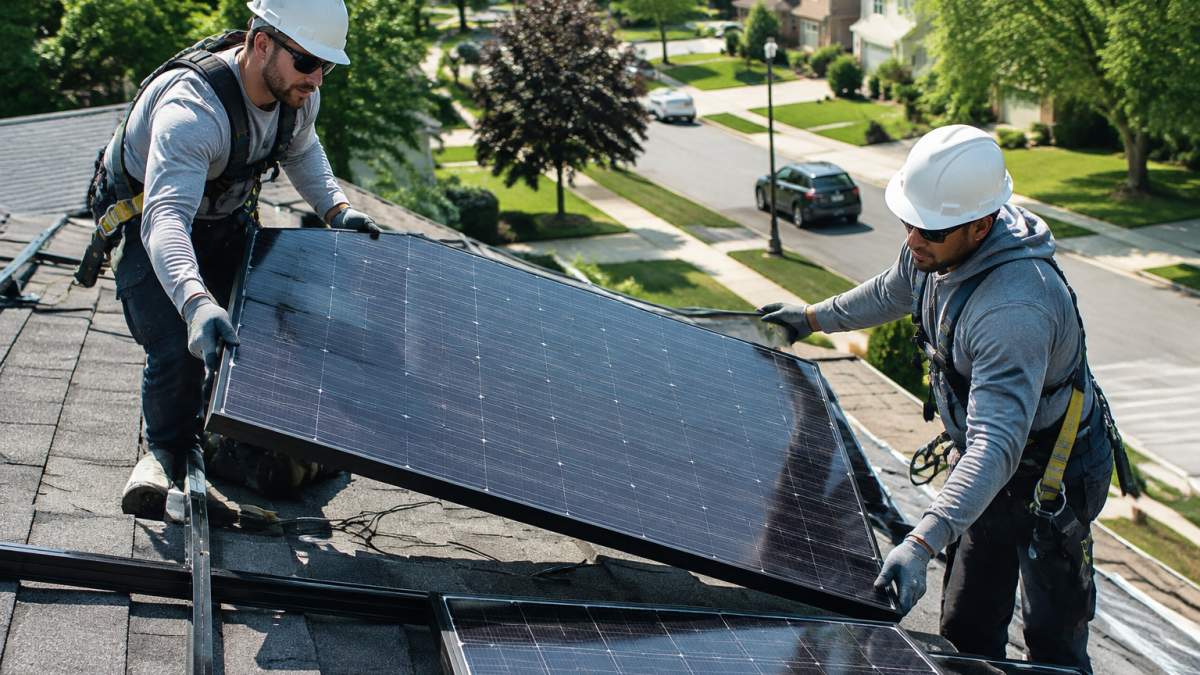
Step-by-step coordination timeline.
- Roof inspection and written condition report. A roofer documents remaining life, deck condition, and flashing. This report drives the decision in the earlier sections.
- Solar site survey and design. The solar installer confirms array layout, attachment points, and conduit runs against the roof plan.
- Permits. Pull the roofing permit and the solar permit, and confirm whether the authority having jurisdiction requires a separate structural or electrical sign-off for the reinstall. Permit sequencing varies by jurisdiction, so confirm locally rather than assuming.
- Roof replacement. Tear-off, deck repair, underlayment, and new roofing. Photograph the deck and flashing before the solar crew arrives.
- Solar removal (if panels already exist). The solar crew de-energizes, removes the array, and labels and stores components.
- Penetration flashing and waterproofing. The roofer flashes the mount locations; the solar installer confirms the attachment hardware matches the new roof surface.
- Panel reinstallation and retest. The solar crew reinstalls, retorques, and tests output against the pre-removal baseline.
- Final inspection and warranty handoff. Both trades sign off, and you collect written workmanship warranties for the roof and the reinstalled system.
Who is responsible for roof penetrations. This is the single most disputed item in a combined project. A common pattern is that the roofer warrants the roof surface and the solar installer warrants the mounts and flashing it installs. Put in the contract which party flashes each penetration, who inspects it, and whose warranty covers a leak at that point. If the answer is "the other guy," you have found the gap that causes disputes.
Permits and code checklist. Confirm the roofing permit, the solar permit, any structural review required for the array, and the electrical inspection for the reinstall. Ask whether the reinstall triggers a new electrical inspection even though the system was previously approved.
What to expect on timing and output. A detach-and-reset takes time that depends on system size and roof complexity, and retesting output after reinstallation is good practice. Ask for the pre-removal output baseline so the retest has something to compare against.
Watch out: if the solar crew reinstalls onto flashing the roofer has not yet inspected, a leak at a penetration can fall between two warranties, require a joint inspection before reinstallation.
Go Solar DMV can outline this sequence for your roofer and solar installer so the work happens in the right order.
What Happens to a Roof When Solar Panels Are Removed
Removing panels exposes the roof where the mounts were attached. Those mounting points, called roof penetrations, must be properly sealed and flashed to prevent leaks. Poor sealing is one of the most common causes of problems after a solar project.
Ask your installer how penetrations are waterproofed and whether the roofer will inspect them. Regular roof inspections can help catch issues early.
Booking Your Roof and Solar Coordination With Go Solar DMV
Coordinating a roof replacement and a solar installation is much easier when one team plans both. Go Solar DMV can help you review your roof's sun exposure and outline how your solar project fits with your roofing plans. Residential solar systems and services are available across Northern Virginia, Maryland, and Washington D.C., with system installation and maintenance at no cost to qualifying homeowners. Residential solar systems and services are available across Northern Virginia, Maryland, and Washington D.C., with system installation and maintenance at no cost to qualifying homeowners.
Contact Go Solar DMV to schedule your roof and solar coordination review.
Frequently Asked Questions
Should I replace my roof before installing solar?
If your roof has limited remaining life, it is generally better to replace it before or alongside the solar installation. Installing panels on a roof that needs replacement soon can mean paying to remove and reinstall the array later. Replacement is not always required, so the decision should rest on the roof's actual condition, not age alone. A roofer or solar installer can inspect the roof and give you a clear answer.
How much does it cost to remove and reinstall solar panels for a roof replacement?
Costs for detaching and resetting solar panels depend on system size, roof pitch, and how many penetrations the mounts require. Panel removal and reinstallation is usually a separate line item from the roof work itself. Go Solar DMV does not publish fixed prices for this work, so contact us for a quote based on your home.
Can I get a tax credit for replacing my roof when I install solar?
Federal tax treatment of solar and roofing changes over time, so confirm current eligibility with a qualified tax professional before you plan around any credit. Ask a qualified tax professional which costs may apply to a solar project. Your installer can help you document costs so you have accurate records. Go Solar DMV can walk you through the cost breakdown for your project.
Does homeowners insurance cover roof replacement with solar panels?
Coverage depends on your policy and your insurer, so review your declarations page and ask your agent whether panel removal and reinstallation during a covered roof repair is included. Notify your insurer before the project starts, and keep written estimates and contracts that separate roof work from panel work. Confirm which party carries workmanship warranties on roof penetrations, since that affects who is responsible if a leak appears later.
