Grid-Tied vs Off-Grid Solar: Which Fits Your Home
Last Updated: November 7, 2026
Quick Summary
Grid-tied solar connects your rooftop panels to the utility network, so the utility stays your backup supply. Off-grid solar has no utility connection and depends on panels, a battery bank and usually a generator. Most homes in the DMV start with a grid-tied system.
- Grid-tied systems shut down during outages unless they include backup-capable battery equipment.
- Off-grid systems must be sized to cover your full load through the lowest-production days of the year.
- Battery replacement is the cost homeowners most often underestimate, according to the article.
- Critical-load backup often provides the resilience most homeowners want at much lower battery capacity than whole-home backup.
- Ask installers to itemize equipment, labor, permitting and battery capacity so quotes can be compared line by line.
Table of Contents
- What Grid-Tied and Off-Grid Solar Systems Are
- Grid-Tied Solar System Cost Compared with Off-Grid
- How Outages Affect Each System: Shutdown Behavior and Safety
- Off-Grid Solar System Sizing and Seasonal Reliability
- Adding Battery Backup to a Grid-Tied System
- On-Grid, Off-Grid, and Hybrid Solar: Choosing Your Setup in the DMV
- Booking a Site Assessment for Your Roof and Usage
- Frequently Asked Questions
What Grid-Tied and Off-Grid Solar Systems Are
Grid-tied solar is the most common setup for homes in Virginia, Maryland, and Washington D.C., and you can see residential rooftop system pricing and home savings estimates for your area. A grid-tied system connects your rooftop panels to the utility's electricity network, so the utility remains your backup supply. An off-grid system has no utility connection at all and depends entirely on the panels, a battery bank and, usually, a generator.
The choice comes down to one question: do you want the utility to stay in the picture? That answer shapes cost, battery needs, outage behavior and how much you rely on your own equipment.
How a Grid-Tied System Connects to the Utility
A grid-tied system uses an inverter to convert the panels' direct current into alternating current that matches your home and the grid. When panels produce more power than your home uses, the excess flows to the utility, and at night or on cloudy days your home draws from the grid as usual. Net metering rules, which vary by utility and state, determine how those exports are credited on your bill.
Because the system is synchronized with the grid, it is designed to shut down when the grid goes down. That protects utility line workers, a point we cover in the outage section below.
How an Off-Grid System Operates Independently
An off-grid system stores energy in batteries and powers your home from that storage. Because there is no utility to fall back on, the system must be sized to cover your full load through the lowest-production days of the year. Most off-grid homes also keep a generator for extended cloudy periods, which adds fuel and maintenance to the ownership picture.
Grid-Tied Solar System Cost Compared with Off-Grid
Upfront cost is where the two designs diverge most sharply, but the gap is driven by equipment, not panels. A grid-tied system needs panels, racking, an inverter, wiring, and permitting, and it can be installed with no battery at all. An off-grid system needs everything a grid-tied system needs plus a larger battery bank, a charge controller, and usually a backup generator with fuel storage. The battery bank is often the largest line item separating the two designs, and it scales with how many days of autonomy you want.
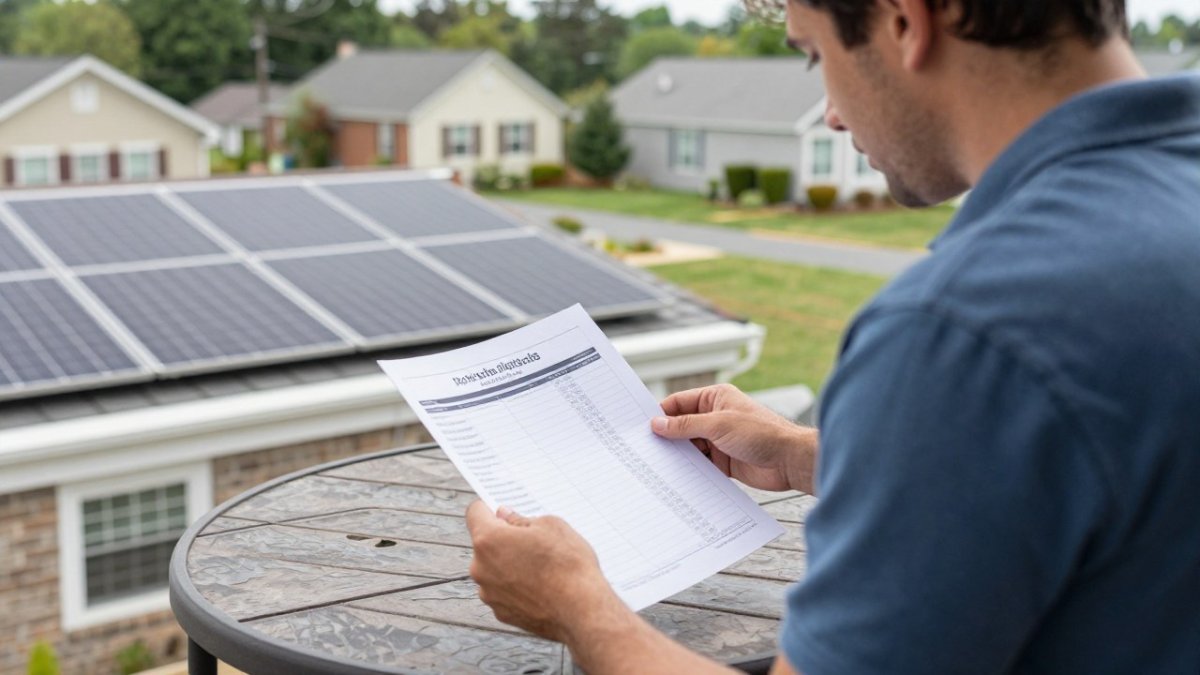
A fair comparison separates four cost buckets: equipment, labor and permitting, ongoing utility charges, and replacement and maintenance over the system's life. Grid-tied homes keep paying a utility bill, though net metering or export compensation can offset much of the energy portion; fixed monthly charges and non-bypassable fees usually remain. Off-grid homes avoid the utility bill but take on battery replacement, generator fuel, and more frequent equipment service. Neither design is automatically cheaper over 20 to 25 years, because the answer depends on local electricity rates, export rules, and how long you expect the batteries to last.
Battery replacement is the line most homeowners underestimate. Inverter replacement is a second lifecycle cost that applies to both designs. Financing adds interest on top of the sticker price, and federal tax incentives may apply to eligible equipment, so confirm current eligibility with a tax professional.
Watch out: a low headline quote often omits batteries, permitting, or the main panel upgrade, which can swing the comparison by thousands of dollars. Ask every installer to itemize equipment, labor, permitting, battery capacity in kilowatt-hours, and expected replacement intervals so you can compare line by line instead of by total.
How Outages Affect Each System: Shutdown Behavior and Safety
A standard grid-tied inverter is required to stop exporting power when the utility de-energizes the lines. This is called anti-islanding, and it protects line workers from encountering energized conductors they believe are dead. The practical consequence is that a grid-tied array without storage produces nothing for your home during an outage, even on a bright sunny day. This is the most common misconception homeowners bring to a site assessment.
Restoring outage power to a grid-tied home requires equipment that can disconnect the home from the utility and form its own reference signal for the inverter. That usually means a storage inverter or a hybrid inverter paired with a transfer mechanism and a battery. Not every battery installation provides backup; some batteries are configured only to shift energy and reduce bills, and they will still shut down with the grid. Confirm in writing that the proposed equipment includes backup or islanding capability before you sign.
Backup design then splits into two approaches. Whole-home backup sizes the battery and inverter to carry your entire service panel, including large loads like air conditioning, electric ranges, and EV charging, which drives up battery capacity and cost. Critical-load backup powers a subpanel with selected circuits such as the refrigerator, lighting, internet, well pump, and medical equipment. Critical-load backup is often sufficient for the resilience most homeowners want, at a fraction of the battery capacity. Transfer equipment, battery power limits in kilowatts, and surge capacity for motor loads all determine what can run at once, and a generator can be integrated to recharge the battery or carry the load during extended outages.
An off-grid system has no grid to island from, so it keeps running during a utility outage by design. The trade-off is that reliability depends entirely on sizing and on your own load management, and a long stretch of heavy cloud cover can still force generator use or load shedding. In both designs, the outage question is really a design question: decide which loads must stay on, for how many hours or days, and size the battery, inverter, and any generator to that target rather than to the whole house by default.
The table below summarises how each setup behaves during a utility outage.
| Setup | Outage behavior | What it needs for backup |
|---|---|---|
| Grid-tied, no battery | Shuts down with the grid | Not applicable |
| Grid-tied with battery | Shuts down unless islanding is included | Backup-capable inverter and transfer equipment |
| Off-grid | Keeps running by design | Sizing to load and generator for long cloudy spells |
| Whole-home backup | Carries full service panel | Larger battery and inverter, higher cost |
| Critical-load backup | Powers selected circuits | Subpanel and smaller battery capacity |
Off-Grid Solar System Sizing and Seasonal Reliability
Sizing an off-grid system means matching panel output and battery capacity to your daily use during the least sunny season, not the average month. Winter production is generally lower than summer production, so an off-grid design sized only on annual averages may fall short in the winter months.
A common approach is to size for your winter load with a margin for days of heavy cloud cover, then add a generator for the rare stretches that exceed that margin.
Adding Battery Backup to a Grid-Tied System
Battery backup lets a grid-tied home keep running during an outage, but only if the system is designed for it. Batteries must be paired with equipment that can isolate the home from the grid and form a separate supply. Not every battery installation provides backup power, so confirm this in writing before purchase.
Battery capacity should match the loads you want to keep running, such as the refrigerator, lighting, internet and select circuits. Sizing for the whole house usually costs considerably more than sizing for critical loads.
Compare Maryland battery storage options, incentives, costs and sizing for your home through our How to Choose a Solar Battery Storage Option in Maryland guide.
On-Grid, Off-Grid, and Hybrid Solar: Choosing Your Setup in the DMV
For most DMV homeowners, a grid-tied system with optional battery backup is the practical starting point. It keeps installation costs lower, uses net metering to offset bills, and can be upgraded with storage later. A fully off-grid setup suits homes far from utility lines or owners who prioritize complete independence over cost.
Hybrid systems combine grid connection with battery storage and often a generator, giving you backup power and grid savings together. Before choosing, measure your roof's sun exposure and usable area. You can check your own roof through our Solar Roof Score: Check Your Roof's Sun Exposure tool.
Booking a Site Assessment for Your Roof and Usage
The right system depends on your roof orientation, shading, electricity use and how much outage protection you need. A site assessment answers those questions with measurements rather than guesses.
If you are ready to move forward, get qualified and we will walk through your options with you.
Frequently Asked Questions
Which is better, grid-tied or off-grid solar?
For most homes in Virginia, Maryland, and Washington D.C., grid-tied solar is the better fit because it costs less upfront, connects to the utility grid for net metering, and avoids the need for a large battery bank. Off-grid systems make sense only where grid power is unavailable or where the owner accepts the cost and maintenance of batteries and a generator for backup. Your roof orientation, shade, and household electricity use should drive the final decision, and a site assessment can confirm which option works for your property.
Can a grid-tied solar system work during a power outage?
A standard grid-tied system shuts off during a utility outage, even if the panels are producing power. This is a safety measure so the system does not feed electricity back onto lines that utility crews are repairing. To keep power on during an outage, you need battery storage and backup-capable equipment, such as a hybrid inverter and a transfer switch. Without those components, a grid-tied system will not power your home when the grid goes down.
Can you add battery backup to a grid-tied solar system?
Yes, battery backup can be added to many grid-tied systems, either at installation or later. The battery stores excess daytime production and supplies critical loads during an outage. Sizing depends on which circuits you want to keep running and for how long. Ask your installer whether your existing inverter supports battery integration, since some older inverters require replacement.
What is the difference between a hybrid and an off-grid solar system?
A hybrid system stays connected to the utility grid and includes batteries for backup, so it can sell excess power through net metering and still run during outages. An off-grid system has no utility connection and relies entirely on panels and batteries, usually with a generator as a reserve. Hybrid systems tend to cost less overall because they need fewer batteries, while off-grid systems require careful sizing to cover the worst weather periods.
