Solar Alternatives for DC Residents: A 2026 Guide
Last Updated: October 23, 2026
Quick Summary
Solar alternatives DC residents can pursue include rooftop solar installation, community solar subscriptions, and energy supplier switching, each offering distinct pathways to renewable energy regardless of roof suitability or housing type.
- DC requires electricity suppliers to obtain 100% renewable power by 2032, with 15% from local solar by 2041.
- Community solar subscriptions typically offer 5-15% bill discounts with no upfront cost and flexible 30-60 day exit terms.
- Rooftop solar systems operate for 25-30 years with minimal maintenance and larger lifetime savings than community solar.
- Solar for All provides free rooftop installations to households earning up to 80% of area median income.
- Historic district properties require design review approval before rooftop solar installation, which can extend timelines significantly.
Table of Contents
- Solar Alternatives for DC Residents: Understanding Your Options
- Rooftop Solar vs. Community Solar: A Step-by-Step Comparison
- Solar Companies in Washington, DC: Local Providers and Services
- Community Solar in Washington, DC: Eligibility and Enrollment
- Are Solar Panels Worth It in DC? Financial Impact and Long-Term Savings
- Solar Provider Comparison Checklist: What to Evaluate Before Choosing
- Federal Tax Incentives, State Rebates, and Grant Eligibility
- Net Metering, Renewable Portfolio Standards, and Local Regulations
- Frequently Asked Questions
Solar Alternatives for DC Residents: Understanding Your Options
When your electricity bill keeps climbing, you face a choice: pay more each year or explore solar alternatives DC residents are using today.
According to the DC Department of Energy and Environment, the District requires electricity suppliers to obtain 100% of their power from renewable sources by 2032, with 15% from local solar by 2041.
The question isn't whether solar alternatives exist in DC. It's which option matches your home's constraints, finances, and timeline.
Rooftop Solar vs. Community Solar: A Step-by-Step Comparison
The fundamental choice for most DC homeowners comes down to two models: installing panels on your own roof or subscribing to a community solar project elsewhere. Both deliver renewable energy, but the mechanics, costs, and eligibility differ.
Rooftop Solar Installation
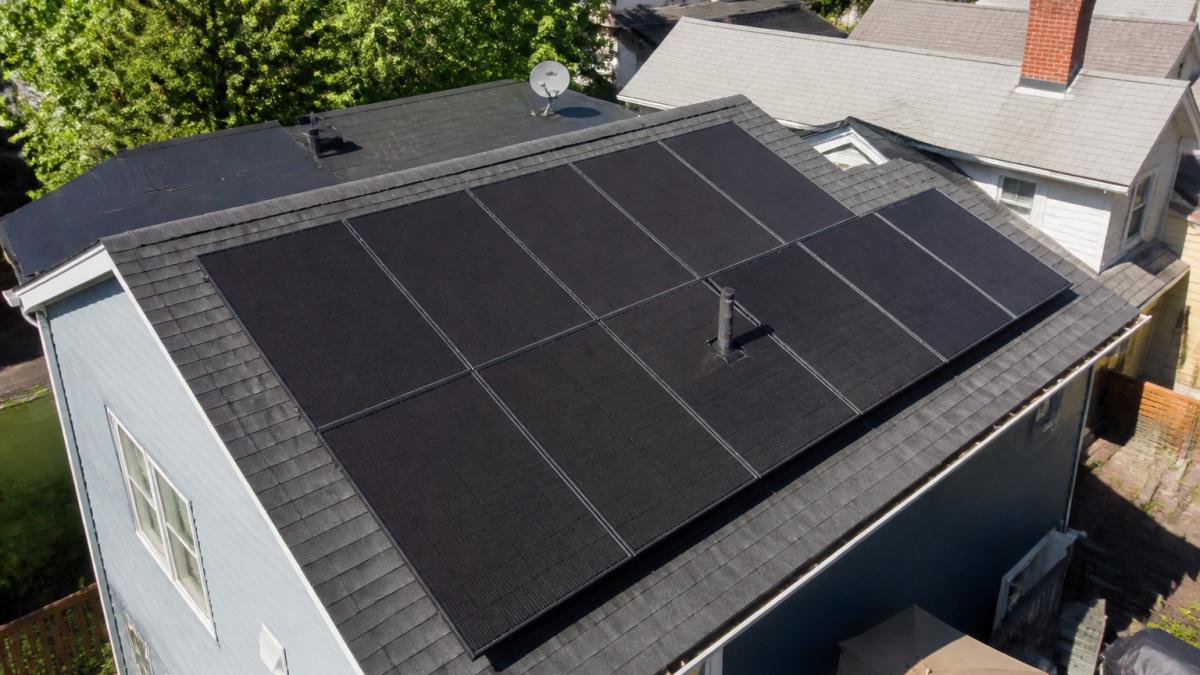
Rooftop solar means you own or lease a system mounted on your property. The installer connects it to your electrical panel, and excess power flows back to the grid through net metering, which credits your account.
This works best for homeowners with unobstructed roof space, adequate southern or western exposure, and a long-term commitment to their property.
Upfront cost varies by system size, equipment quality, and local labor market. Once installed, rooftop systems require minimal maintenance and operate for 25-30 years.
Community Solar Subscription Models
Community solar flips the model.
This option works for renters, condo owners, and homeowners with unsuitable roofs. You're not responsible for installation, maintenance, or equipment replacement; the developer handles everything.
According to the DC Sustainable Energy Utility's Solar for All program, community solar is presented as allowing households that cannot afford on-site solar to receive a portion of electricity from a remote solar project.
The trade-off: community solar credits are usually smaller than rooftop credits because the project is shared among many subscribers. Savings depend on project efficiency, developer overhead, and your share size.
Solar Companies in Washington, DC: Local Providers and Services
The DC solar market includes several distinct provider categories, each serving different customer needs.
Rooftop Solar Installers handle the full installation process: site assessment, permitting, equipment procurement, installation, and interconnection.
Community Solar Developers build and operate shared solar projects.
Energy Suppliers and Aggregators like DC Power Connect let you switch to a renewable energy supplier without changing your physical utility.
Go Solar DMV consolidates information across all these categories. Our Master ZIP code index maps which solar options are available in your neighborhood, eliminating hours of researching programs you don't qualify for. Find and compare solar companies near you to evaluate installers on cost, warranties, reviews, and estimated savings.
Community Solar in Washington, DC: Eligibility and Enrollment
Community solar eligibility varies by program, but baseline requirements are consistent: you must be a District resident and a Pepco customer, and your address must fall within the project's service territory.
The enrollment process typically involves:
- Confirming your address is within the project's service area
- Verifying your Pepco customer status
- Reviewing your utility bill to determine an appropriate subscription size
Once active, your monthly utility bill shows two line items: normal electricity charges and a credit for your community solar generation. The credit reduces your bill, but you still pay for electricity consumed above what the project generates.
What the Subscription Agreement Actually Commits You To
The subscription agreement determines your real risk. Before signing, confirm four things:
- The discount rate. Most developers advertise a fixed percentage off the value of your credits (commonly 5-15%). Ask whether that discount is guaranteed for the full term or can be adjusted.
- The exit terms. Many subscriptions allow cancellation with 30-60 days' notice, but some impose early-termination fees or require a replacement subscriber. Get the exit language in writing.
- Credit rollover. If your project generates more credits than your bill can absorb in a month, confirm whether unused credits roll over or expire.
- Bill-payment responsibility. You remain responsible for paying Pepco for your full bill; the solar credit is applied to that bill, not paid to you separately. Missing a utility payment is not excused by the solar credit.
Utility-Administered vs. Third-Party Projects
Two structural models exist in the District, and they behave differently for subscribers:
- Utility-administered programs (including Solar for All, run by the DC Sustainable Energy Utility) are designed around income eligibility and often provide free installations to qualifying households. Enrollment is tied to program eligibility rather than a commercial contract, and savings pass through as a bill credit.
- Third-party developer projects are commercial subscriptions. You sign a contract with a private developer, who builds and operates the array, and you receive credits under that contract. These are open to a broader pool of residents but carry the contract terms described above.
According to the DC Sustainable Energy Utility's Solar for All program, community solar is presented as allowing households that cannot afford on-site solar to receive a portion of electricity from a remote solar project. The program structure removes financial and technical barriers for eligible residents.
A Step-by-Step Comparison: Community Solar vs. Rooftop Solar
Here is the direct side-by-side that actually helps you choose:
| Decision Factor | Rooftop Solar | Community Solar |
|---|---|---|
| Who qualifies | Homeowners with suitable roof and long-term plans | Renters, condo owners, homeowners with unsuitable roofs |
| Upfront cost | Varies by system; leases and PPAs can be $0 down | Typically $0 upfront |
| Bill impact | Larger lifetime savings; offsets most or all usage | Smaller, immediate bill reduction (commonly 5-15%) |
| Maintenance | Owner or lessor responsible | Developer handles everything |
| Commitment | 20-25 year lease or loan term | Often 30-60 day exit, but check the contract |
| Roof risk | Shading, age, structural issues can block installation | None |
| Portability | Stays with the house | Usually tied to your address and utility account |
If you own your home, plan to stay, and have a suitable roof, rooftop solar generally produces the larger financial return. If you rent, live in a condo, have a shaded or historic-district roof, or expect to move soon, community solar is the lower-risk path.
You can explore community solar enrollment options and compare available programs through Go Solar DMV's platform, which identifies which projects serve your address and what your estimated savings would be.
Are Solar Panels Worth It in DC? Financial Impact and Long-Term Savings
The financial case for solar in DC depends on three factors: your electricity rate, your system's production, and available incentives.
DC electricity rates are moderate compared to the Northeast but have risen steadily. A typical household pays $1,200-$1,800 annually.
The real financial advantage emerges over time.
Community solar offers smaller but more immediate savings: with no upfront cost and no roof-suitability risk.
To understand your specific financial picture, review a detailed cost breakdown and payback analysis that accounts for your home's characteristics, local incentives, and financing options.
Solar Provider Comparison Checklist: What to Evaluate Before Choosing
When comparing solar alternatives DC homeowners should evaluate, focus on these criteria:
| Evaluation Criterion | What to Look For | Why It Matters |
|---|---|---|
| Equipment warranty | 25-30 year manufacturer coverage | Protects your investment if panels degrade early |
| Performance guarantee | 80%+ output after 25 years | Ensures long-term energy production meets expectations |
| Installation timeline | 2-4 weeks from approval to activation | Affects how soon you see savings |
| Financing transparency | Clear breakdown of lease vs. purchase terms | Prevents surprise fees or unfavorable terms |
| Maintenance responsibility | Company handles all repairs and replacements | Affects your ongoing costs and hassle |
| Cancellation policy | Exit terms and associated fees | Provides flexibility if circumstances change |
| Local references | Verifiable customer reviews and case studies | Confirms the company delivers on promises |
Go Solar DMV's quote comparison audit walks you through each factor for every proposal you receive. Rather than comparing prices alone, which often hides differences in service quality, we help you evaluate the complete package.
Federal Tax Incentives, State Rebates, and Grant Eligibility
The federal investment tax credit (ITC) remains the largest financial incentive for rooftop solar.
For renters and lower-income homeowners, the Inflation Reduction Act expanded access to clean energy incentives through direct rebates and grants.
According to the Clean Energy DC Omnibus Act of 2018, the District increased its solar carve-out from 5% to 10% by 2041, creating long-term demand for solar installations and supporting job training programs like Solar Works D.C.
State-level incentives vary. Maryland offers property tax exemptions for solar installations, while Virginia provides sales tax exemptions for solar equipment.
Explore available incentives and rebates specific to your location through Go Solar DMV's incentive tracker, which updates as programs change.
Net Metering, Renewable Portfolio Standards, and Local Regulations
Net metering is the mechanism that makes rooftop solar financially viable. When your panels generate more power than you consume, the excess flows to the grid.
Go Solar DMV provides 1:1 net metering tariffs. This is not universal; some utilities offer lower rates for exported power, which significantly reduces solar economics.
The Renewable Portfolio Standard (RPS) requires DC electricity suppliers to source increasing percentages of power from renewables.
The Local Regulation Most Guides Skip: Historic Districts and Zoning
The District has some of the strictest historic preservation rules in the country, and they routinely block or delay rooftop solar in neighborhoods where residents most want it.
Historic districts and landmarks. If your home is in a historic district or is an individually designated landmark, exterior modifications, including visible solar panels, generally require review before installation.
What this means practically. Before detailed assessments or signing a contract, confirm whether your address sits in a historic district or is subject to design review.
Maintenance and Long-Term Service Expectations
Most guides stop at installation. What happens afterward matters just as much for your return.
- Monitoring. Most systems include production monitoring through an app or portal. Check production against the installer's estimate at least quarterly; a persistent shortfall is usually an inverter or shading issue, not normal degradation.
- Degradation. Panels lose output gradually. Warranties commonly guarantee a specified percentage of original output after 25 years, so confirm the exact figure in your contract rather than assuming it.
- Repairs. Inverter replacement is the most common mid-life repair. Confirm who pays and whether labor is covered, not just the part.
These questions belong in your provider comparison, not in a post-installation surprise.
Frequently Asked Questions
What are the main solar alternatives available to DC residents?
DC residents can pursue rooftop solar installation, community solar subscriptions, renewable energy procurement through third-party suppliers, or programs like Solar for All. Rooftop solar offers direct ownership and net metering benefits, while community solar serves renters and those with unsuitable roofs. Third-party suppliers provide renewable energy options without installation, and Solar for All offers free systems to eligible low-income households. Each alternative has different eligibility requirements, upfront costs, and long-term savings potential.
How do rooftop solar and community solar compare in DC?
Rooftop solar requires roof ownership and upfront investment or financing, but offers 1:1 net metering under DC rules, allowing you to offset your full electric bill. Community solar requires no installation, works for renters and condo owners, but typically offsets a portion of your bill through a subscription model. Rooftop solar provides energy independence and long-term rate stability; community solar offers flexibility with lower commitment. DC's renewable portfolio standard makes both options aligned with policy.
Are solar panels worth it in DC based on electricity costs and incentives?
Solar panels are worth it in DC if you own your roof, have adequate sun exposure, and plan to stay. DC's net metering policy (1:1 credit) and the federal Investment Tax Credit significantly improve return on investment. Long-term rate stability matters: locking in solar costs protects against utility rate increases. Use tools like Google Project Sunroof to assess your specific roof's solar potential before deciding.
What should I look for in a solar provider comparison checklist?
Evaluate solar providers on installation cost, warranty coverage, maintenance terms, financing options, and their track record with net metering claims. Verify they understand DC's renewable portfolio standard and local zoning rules. Ask about performance guarantees and what happens if the company goes out of business. Compare multiple quotes using tools that assess roof irradiance and shade patterns. Check references from DC homeowners and confirm the provider is licensed and insured in your state.
What federal and state incentives reduce the cost of going solar in DC?
The federal Investment Tax Credit (ITC) covers a portion of installation costs for residential solar systems. DC offers property tax exemptions for solar installations and rebates through the DC Sustainable Energy Utility. Maryland and Virginia have their own state incentives and renewable energy credits (RECs) that vary by county. Solar for All provides free installations to income-eligible DC residents. Check with your local utility and state energy office for current rebate programs, as funding and eligibility change annually. Get quotes that show incentives applied to your final cost.
