Solar Energy World vs EDGE Energy: 2026 Comparison
Table of Contents
- Solar Energy World vs EDGE Energy: Head-to-Head Overview
- Solar Installation Services and Local Availability
- Solar Financing Options and Ownership Models
- Solar Installer Warranty Comparison
- Questions to Ask a Solar Installer Before Deciding
- Customer Reviews and Ratings
- Which Provider Is Right for Your Home?
- Conclusion
- Frequently Asked Questions
Last Updated: October 19, 2026
Solar Energy World vs EDGE Energy: Head-to-Head Overview
Solar Energy World vs EDGE Energy is a common decision point for regional homeowners, and the choice affects your savings, warranty, and installation experience. Both companies operate locally and offer residential systems, but differ significantly in financing, service areas, and long-term support.
The goal isn't the flashiest company, it's the provider whose financing model, warranty structure, and service area match your situation. Understanding these differences upfront prevents costly regrets.
This guide compares Solar Energy World and EDGE Energy on where they operate, what they charge, how they back their work, and what customers report.
Solar Installation Services and Local Availability
Service Areas and Coverage
Solar Energy World operates across Maryland, Virginia, and Washington D.C., giving them broad regional reach. EDGE Energy also serves the region but may have different ZIP code coverage depending on current expansion plans. Service area boundaries shift over time.
The practical question: can they actually install at your address? A website might show regional service, but crews have geographic limits and some areas fall outside their territory entirely. Before comparing financing or warranties, verify that both companies serve your specific location.
Go Solar DMV's Master ZIP code index identifies coverage gaps, so you don't waste time on quotes from companies that can't reach your home.
Installation Process and Timeline
Both companies follow similar workflows, site assessment, design, permitting, installation, and interconnection, typically spanning several weeks from quote to activation, depending on permitting speed and crew availability.
They diverge in communication: some installers provide weekly updates, others go silent for days. Workmanship also varies, sloppy wiring, poor roof sealing, or inadequate grounding surfaces months later. Ask each company for their typical timeline, what happens if they miss it, and references from recent customers about the installation experience, not just system performance.
Solar Financing Options and Ownership Models
Financing is where Solar Energy World and EDGE Energy diverge most, and it most changes your 25-year economics. The three structures, cash purchase, solar loan, and lease or power purchase agreement (PPA), each shift ownership, tax benefits, and maintenance responsibility differently.
Cash purchase. You pay the full price and own the equipment from day one, claim the 30% federal residential clean energy credit under IRC Section 25D, and keep every kilowatt-hour of production and any net-metering credits.
Solar loan. You own the system and still claim the 30% credit, but spread the cost over a term, commonly 10, 15, 20, or 25 years.
Lease or PPA. A third party owns the system; you make a fixed monthly lease payment or pay a per-kilowatt-hour PPA rate, usually with no money down.
Ownership vs. non-ownership: the compounding difference
The most consequential question is who owns the system. If you own it, the 30% federal credit and any state or utility incentives flow to you, and you capture the full value of production for the system's life. If you lease or sign a PPA, the third party captures those benefits and you get a predictable rate instead. Over 25 years that gap compounds, ownership usually wins for homeowners with sufficient tax liability and a long horizon, while leases appeal to those wanting zero upfront cost and no maintenance.
Incentives that change the math
Beyond the federal credit, stack the incentives that apply to your address before comparing quotes. Net energy metering rules determine how exported production is credited and vary by utility, confirm the current tariff rather than relying on a salesperson's summary. State and local programs, property-tax treatment, and utility rebates all shift the effective cost, so verify current terms with the utility and your tax advisor.
What to ask each provider about financing
- Which structures do you offer directly, and which run through a lending partner?
- For a loan: what is the APR, the term, the dealer fee, and the prepayment policy?
- For a lease or PPA: what is the starting rate, the annual escalator, the term, and the buyout price?
- Who claims the 30% federal credit under this structure?
- How is the agreement transferred if I sell the home?
Solar Installer Warranty Comparison
A solar purchase carries three separate warranties, and confusing them is a common buyer mistake. They cover different things, run for different lengths, and are honored by different parties. Compare Solar Energy World and EDGE Energy on all three, not just the headline number.
1. Product (equipment) warranties
These come from manufacturers, not the installer. Panels commonly carry a 25-year product warranty plus a performance warranty guaranteeing a minimum output (often around 80% of rated power at year 25); inverters typically carry 10-15 years, with optional extensions. The real question is which brands each company installs and whether those manufacturers have a strong service history. Ask for model numbers and read the manufacturer's warranty document directly.
2. Workmanship warranties
This is the installer's own promise covering how the system was put on your roof, flashing, mounting, sealing, wiring, and grounding. Workmanship failures cause problems equipment warranties won't cover: roof leaks, loose racking, and electrical faults. Coverage commonly runs 5-10 years, but scope matters as much as length: does it cover panel removal and reinstallation to reach a leak, roof repair or only solar components, and labor?
3. Performance and production guarantees
Some installers guarantee a minimum annual production and pay the difference if the system underperforms. These guarantees depend entirely on the production estimate being accurate, so ask to see the modeling assumptions, shading, roof orientation, and weather data, behind the number.
How claims actually get handled
What happens in year five when something fails matters more than the document. Ask each company:
- Do I call you or the manufacturer for an equipment claim, and who coordinates the replacement?
- What is your response time for a service call, and is there a trip charge after the workmanship period ends?
- If you subcontract installation, who honors the workmanship warranty, you or the subcontractor?
- What happens to my warranty if the company is acquired or goes out of business?
Monitoring and post-installation service
Most systems include monitoring hardware and an app, but the value is in who watches the data. Ask whether the installer monitors production and alerts you to underperformance or that falls to you, who handles service calls, and whether monitoring is included for the system's life or only an initial period. A system that quietly underproduces for a year costs real money, so confirm someone is accountable for catching it.
Questions to Ask a Solar Installer Before Deciding
Before committing to either Solar Energy World or EDGE Energy, ask these questions:
On pricing and financing: "What's your total system cost before incentives? What financing options do you offer, and what are the interest rates? If I choose a loan, what are the prepayment penalties? Do you offer a lease or PPA, and if so, what's the cost per kilowatt-hour?"
On the system itself: "Which panel and inverter brands do you use? What are the efficiency ratings?
On warranties and service: "What does your workmanship warranty cover and for how long? If something fails in year 5, how quickly will you respond?
On timeline and permits: "When can you start, and how long until activation? Who handles permitting, you or me? What if the city delays permits?"
On long-term support: "Who maintains the system after installation? If you go out of business, who's responsible for service?"
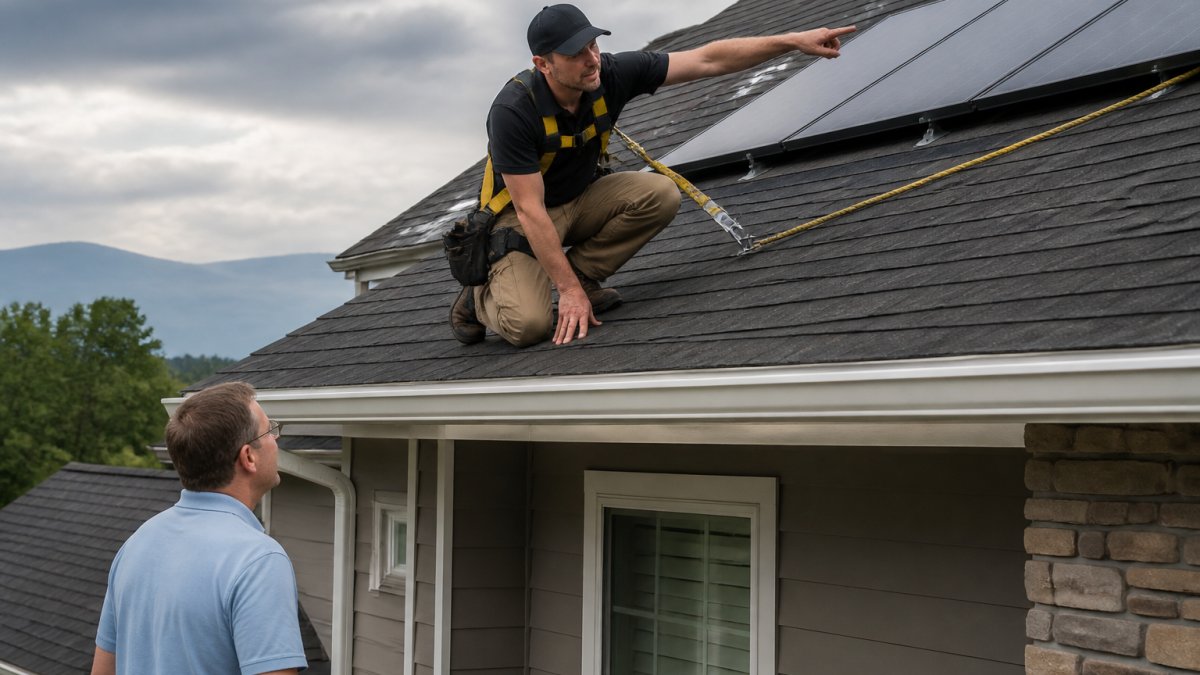
These questions separate companies that stand behind their work from those that disappear after the installation check clears.
Customer Reviews and Ratings
Online reviews offer real-world insight into performance. Check Google, the Better Business Bureau, and industry-specific sites for patterns. A few negative reviews are normal; dozens of complaints about the same issue, missed timelines, unresponsive support, poor workmanship, signal a systemic problem.
Pay attention to what customers praise and criticize. Fast installation paired with complaints about poor communication, or responsive service paired with high pricing, tells you the specific trade-offs that company offers.
The most useful reviews come from customers in your area who installed within the last 1-2 years, reflecting current operations rather than how the company performed five years ago.
Which Provider Is Right for Your Home?
The answer depends on your priorities.
Choose Solar Energy World if you value broad regional presence and established multi-state operations. That scale can mean faster permitting relationships and consistent processes, though possibly less personalized attention.
Choose EDGE Energy if you prefer a more localized operator with tighter community connections. Smaller companies sometimes offer more flexible financing or personalized service, though they may have less financial stability years later.
Neither choice is correct without understanding your situation. If you own your roof outright and plan to stay 10+ years, ownership-based financing maximizes savings. If your roof faces west with afternoon shade, you need accurate modeling before committing.
Conclusion
Choosing between solar providers isn't about the best marketing, it's about matching your home's characteristics, financial situation, and long-term plans with a company structured to deliver on all three. Solar Energy World and EDGE Energy both operate in the region but differ in financing flexibility, warranty depth, and service area coverage. The right choice depends on whether you prioritize broad regional presence, localized service, ownership-based savings, or zero-upfront-cost simplicity.
Go Solar DMV helps you cut through the noise. Our platform combines Google Project Sunroof 3D modeling, 1:1 net metering analysis, and comprehensive quote audits to show you exactly what each provider offers your specific home. Get started with Go Solar DMV today and secure a system installed and maintained at no cost while keeping your electric rates stable for up to 25 years.
Frequently Asked Questions
Is Solar Energy World the same company as EDGE Energy?
No. Solar Energy World and EDGE Energy are separate solar providers operating in different service areas. Solar Energy World operates primarily in the Mid-Atlantic region, while EDGE Energy serves customers across multiple states. Both offer residential solar installation, but they differ in financing options, warranty terms, and local availability. Check your ZIP code on both companies' websites to see if they service your area.
What solar installation quote comparison should I request from each installer?
Request itemized quotes that include system size in kilowatts, equipment brand and model, total installation cost, financing options available, production estimates for your specific roof, warranty periods for panels and inverter, and expected monthly savings. Ask each installer to model your roof using 3D irradiance data to account for shade and orientation. Compare quotes on the same basis: same system size and equipment, not just lowest price.
Which company offers better solar financing options?
Solar financing varies by provider and your credit profile. Common options include cash purchase, loans, leases, and power purchase agreements (PPAs). Solar Energy World and EDGE Energy may offer different financing structures depending on your state and situation. Request a detailed breakdown of each financing option's costs over 25 years, including interest rates, monthly payments, and any escalation clauses. Ask whether federal tax credits and state incentives are passed to you or retained by the company.
What should I verify before choosing between these solar installers?
Confirm each company is licensed and insured in your state. Review their workmanship warranty length and what it covers. Ask for references from recent installations in your area. Check online reviews on independent sites, not just their websites. Verify they explain how net metering works in your specific state (rules differ between Maryland, Virginia, and D.C.). Request a written guarantee of production estimates and post-installation monitoring support.