Does Solar Work on West-Facing Roofs? A 2026 Guide
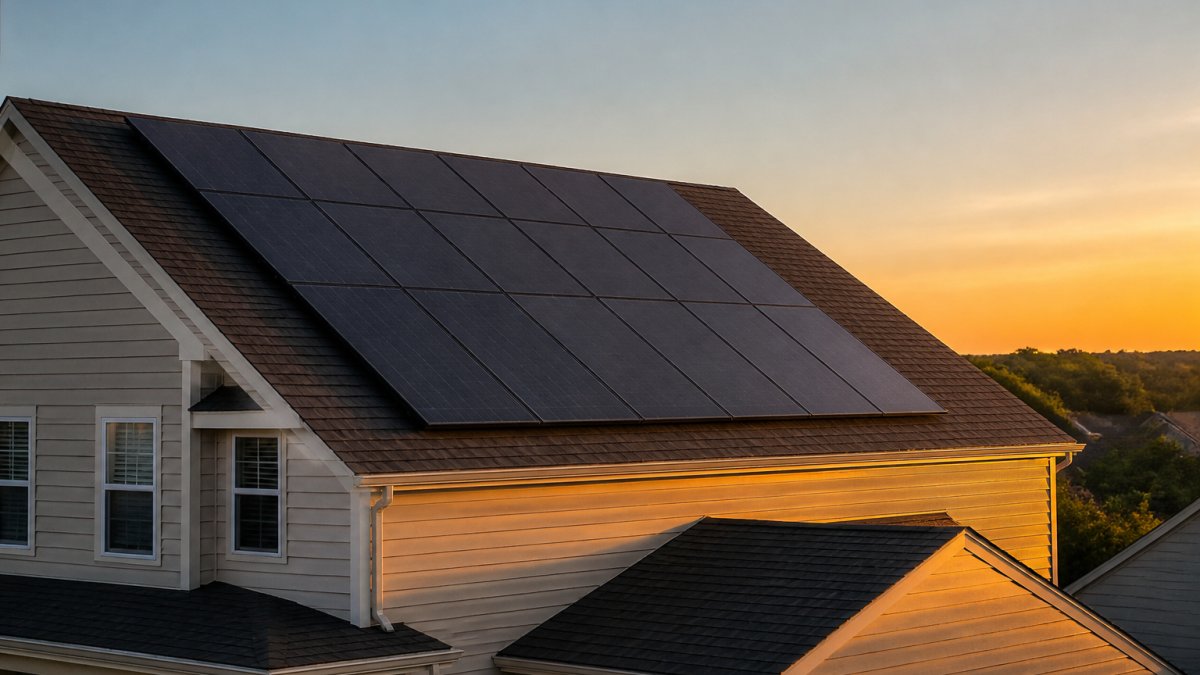
Table of Contents
- Do West-Facing Solar Panels Actually Work?
- How Solar Panel Output by Direction Affects Your System
- Best Roof Direction for Solar Panels in Your Climate
- Solar Roof Shade Analysis: Assessing Your West-Facing Roof
- Shade Mitigation: When Tree Trimming or Panel Technology Makes Sense
- Solar Savings by Time of Use: Maximizing West-Facing Potential
- Financial Viability: Will West-Facing Solar Pay Off?
- Frequently Asked Questions
Last Updated: October 14, 2026
Do West-Facing Solar Panels Actually Work?
Yes, does solar work on west facing roofs? The answer is yes, solar panels work on west-facing roofs and generate meaningful savings for many homeowners.
West-facing panels capture strong afternoon and evening sun, aligning with peak electricity usage.
The question is: does solar work on west facing roofs? The answer depends on three factors: your roof's shade patterns, your usage timing, and your local net metering rules.
How Solar Panel Output by Direction Affects Your System
Solar panel output by direction is the foundation of any installation decision, your roof's orientation determines how much sunlight your panels receive.
South-facing roofs are the gold standard in the Northern Hemisphere, capturing the most total sun energy.
A west-facing system typically produces 15-25% less annual energy than an identical south-facing system, significant, but not a deal-breaker.
West-Facing vs. South-Facing: The Performance Gap
West-facing panels miss the morning and early afternoon peak solar hours, when south-facing panels capture the sun's strongest rays, so south-facing systems generate more total electricity over a year.
The performance gap shrinks when you factor in actual usage. If your peak consumption is in the afternoon and evening, a west-facing system may deliver better financial results than raw numbers suggest.
Why Afternoon Production Matters for Your Bills
Your bill depends on how much power you use and when. Time-of-use rates, increasingly common across the region, charge more during peak hours and less off-peak.
West-facing panels produce power during peak rate hours, offsetting the most expensive electricity. Generating at the right time can cut your bill more than generating more total power at the wrong time.
Best Roof Direction for Solar Panels in Your Climate
The ideal roof direction depends on your climate, utility rates, and usage patterns. In the Mid-Atlantic region where Go Solar DMV operates, most roofs benefit from south or southwest orientation.
But west-facing roofs are viable. Your trees, buildings, roof pitch, and electricity consumption determine whether west-facing solar makes financial sense for you.
Roof Pitch and Angle Considerations
Roof pitch affects how sunlight hits your panels. The optimal angle equals your latitude, roughly 38-39 degrees in the DMV area.
Most residential roofs have pitches between 4:12 and 8:12, close to optimal for solar.
Pitch matters most when combined with shade: a steeper roof might escape afternoon tree shade that would block a flatter one, while a shallow roof might catch more afternoon sun.
Combining Multiple Roof Orientations
Many homes have roofs facing multiple directions. A system using both south-facing and west-facing panels often outperforms a single-direction system.
Combining directions smooths production: south-facing panels peak at midday, west-facing panels peak in the afternoon, and together they provide steadier output from morning through evening.
This approach also reduces the impact of partial shade.
Solar Roof Shade Analysis: Assessing Your West-Facing Roof
Shade is the biggest threat to west-facing solar production.
What you need is a shade map: a record of where shadows fall on the west plane at each hour, across each season.
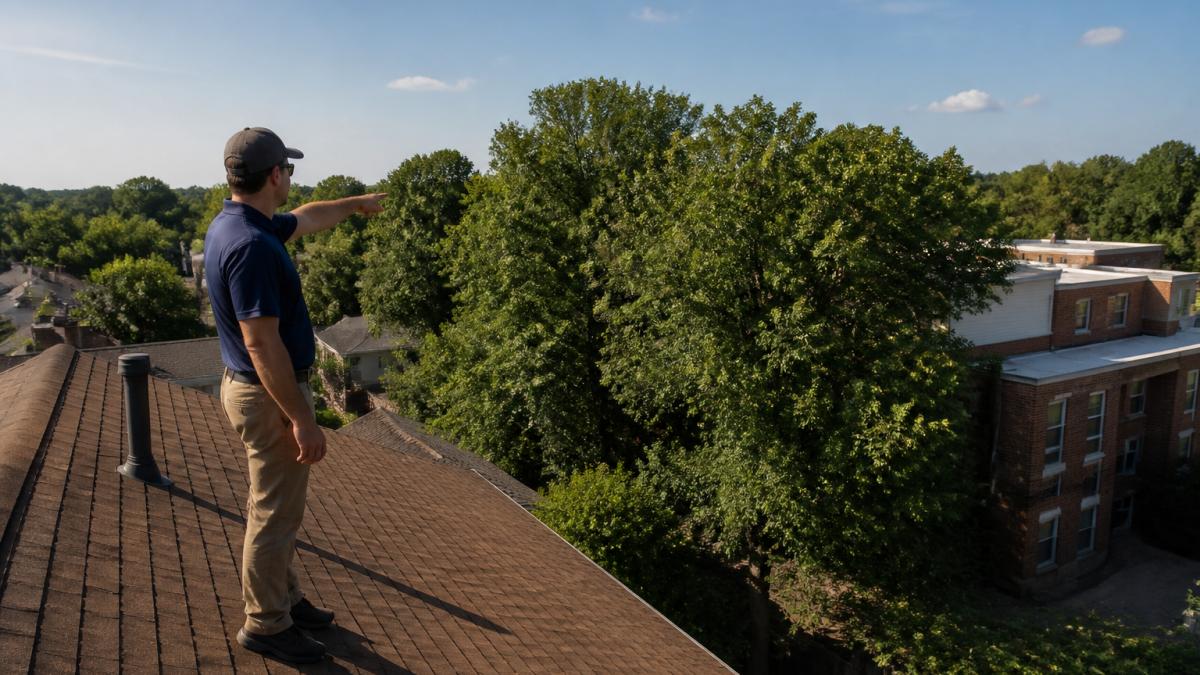
Step 1: Record the Sun's Path, Not Just Today's Shadow
The sun's arc changes dramatically across the year. In the continental U.S., the sun rises and sets well north of due east and west in June, and well south of those points in December.
A practical way to capture this without instruments:
- Pick one clear day per season, near the spring equinox (late March), summer solstice (late June), fall equinox (late September), and winter solstice (late December).
- On each day, photograph the west-facing roof plane at roughly 10 a.m., noon, 2 p.m., 4 p.m., and 6 p.m. local time.
- Note which roof sections are shaded in each photo and by what, a specific tree, a neighbor's chimney, a utility pole, a building.
- Repeat from the same vantage point each season so the photos line up.
Four days of photos give a far more honest picture than any single site visit.
Step 2: Separate Shade Types, Because They Behave Differently
Not all shade is equal, and the type determines what mitigation makes sense:
- Hard shade comes from solid, permanent objects, buildings, chimneys, parapet walls, mature evergreens. It does not move much season to season and cannot be trimmed away.
- Soft or intermittent shade comes from deciduous trees, which lose their leaves in winter, and from things like flagpoles or thin branches that cast dappled shadows. This type often looks worse in photos than it performs in practice.
- Moving shade crosses the roof as the sun tracks west. A shadow that clips the bottom row of panels for 40 minutes is very different from one that parks over the array for three hours.
Map each shadow to one of these categories. Hard shade over the array is where module-level electronics earn their cost; moving shade over a small edge is often something a designer can route around by leaving that section empty.
Step 3: Use Tools to Verify What Your Eyes Miss
Visual inspection tells part of the story; tools quantify what your photos only suggest.
- Google Project Sunroof uses satellite imagery and 3D modeling to estimate sun exposure on your specific roof, accounting for shade from trees, buildings, and terrain across the year. It reports hourly production estimates for different roof sections, which is exactly the season-and-time resolution a west-facing decision needs.
- On-site shade scanners, handheld devices some installers carry that photograph the sky from the roof plane and compute a horizon profile, produce a shade report tied to your actual array location rather than a satellite approximation.
- Production monitoring after installation, through the inverter or module-level app, lets you confirm the modeled numbers against real output and catch a tree that has grown into the array's path.
Our AI Solar Advisor at Go Solar DMV uses this kind of time-of-day and season analysis to determine whether west-facing panels make sense for your home. The goal is to answer one question: how many hours of unshaded afternoon sun does this roof plane receive in the months that matter most?
Many homeowners skip this step and regret it. A system designed without proper shade analysis underperforms and fails to deliver promised savings, and the shortfall shows up in the afternoon hours when west-facing production was supposed to be the whole advantage.
Shade Mitigation: When Tree Trimming or Panel Technology Makes Sense
If shade blocks your west-facing roof, you have options, some simple, some requiring investment. The right choice depends on how much shade you're dealing with.
Microinverters and Power Optimizers for Partial Shade
Microinverters and power optimizers solve this problem. Each panel gets its own inverter or optimizer.
This costs more upfront, but for partially shaded roofs it delivers better long-term results and more production from the same system size.
Go Solar DMV evaluates shade patterns to determine if microinverters make financial sense for your home. Sometimes they're worth the extra cost.
Tree Removal and Trimming Decisions
Removing a tree that shades your roof might seem obvious, but trees also cool your home, improve air quality, and add property value.
Trimming is often better than removal: strategic trimming removes shade-casting branches while preserving the tree, and works well for deciduous trees that lose leaves in winter anyway.
Get a certified arborist's opinion before cutting, some trees are protected by local ordinances, and others are valuable enough that trimming beats removal.
Solar Savings by Time of Use: Maximizing West-Facing Potential
West-facing panels shine brightest under time-of-use rates, which charge more for peak-hour electricity and less off-peak.
Your savings depend on how well your system's production aligns with peak rates. West-facing panels naturally align with afternoon and evening peaks in many areas.
When Your Peak Usage Aligns with Peak Production
Check your electricity bill for time-of-use rate information. Most utilities in the region publish their peak hours.
Peak hours typically run 2 p.m. to 8 p.m. in summer and 5 p.m. to 9 p.m. in winter, exactly when west-facing panels produce power.
If your air conditioning runs hard in the afternoon, a west-facing system offsets your most expensive electricity, a major advantage raw production numbers don't capture.
Net Metering and Evening Bill Reduction
Net metering credits you for excess power: if your panels produce more than you use, the extra goes to the grid and you're credited at the retail rate.
West-facing systems produce power in the evening when many homes are still consuming, so less excess goes to the grid and more is used on-site at peak rates.
Financial Viability: Will West-Facing Solar Pay Off?
West-facing solar makes financial sense if three conditions are met: good sun exposure, high enough electricity rates, and a roof suitable for a 25-year system. Here's the arithmetic, laid out so you can run it yourself before you sign anything.
Step 1: Estimate Annual Generation From a Shade-Adjusted Number
Start with a professional solar assessment, but don't accept a single production figure without asking how it was derived.
A useful sanity check: a well-sited, unshaded south-facing system in most U.S. markets produces roughly 1,200 to 1,500 kilowatt-hours (kWh) per installed kilowatt (kW) per year.
Worked example with round numbers you can swap for your own:
- System size: 8 kW
- West-facing, minimal shade: assume 1,100 kWh per kW per year
- Estimated annual generation: 8 × 1,100 = 8,800 kWh
With moderate afternoon shade costing 20%, that estimate drops to about 7,040 kWh, often the difference between a system that pays back on schedule and one that doesn't.
Step 2: Convert Generation to Bill Savings, and Respect the Timing
Multiply annual generation by the value of the electricity it offsets, not one number, since time-of-use rates pay differently by hour.
- If your utility credits exported power at the full retail rate under net metering, the math is simple: generation × your effective rate.
- If you are on a time-of-use plan, the afternoon and evening kilowatt-hours a west-facing array produces are worth more than midday kilowatt-hours. That timing advantage is real, but it is also capped, you can only offset electricity you actually consume at those hours.
- If your utility has moved to a lower export credit or a buy-all/sell-all structure, exported power is worth less than power you use on-site, which makes self-consumption the priority.
A common pattern: a west-facing system produces fewer total kilowatt-hours than a south-facing one but a larger share during peak-rate hours, so the bill savings gap is narrower than the production gap.
Step 3: Build the Payback and Cash-Flow Picture
Payback is system cost divided by annual savings. But the honest version accounts for a few more lines:
- Upfront cost after any federal residential clean energy credit and any state or utility incentives you qualify for. Confirm current eligibility and rules with a tax professional, since credit terms and caps change.
- Annual savings, from Step 2.
- System degradation, typically modeled at roughly 0.5% per year for modern panels, which trims later-year savings slightly.
Most unshaded solar systems pay for themselves in roughly 6-10 years, and west-facing systems typically land in the 7-12 year range. Treat those as planning bands, not promises, a heavily shaded west roof can fall outside the band entirely.
Step 4: Size the System to the Roof You Have
West-facing roofs often force a sizing decision: because each panel produces less, you may need more panels to hit a target, but a shaded or small west plane may not have room. Two common outcomes:
- Fill the west plane and add south or east panels to make up the difference, accepting a blended production profile.
- Downsize the target and offset a smaller share of your bill, which can still pencil out if your peak-hour usage is high.
A good designer shows you both and lets you choose; a weak proposal quotes one system size with no explanation.
How to Evaluate Competing Quotes
Get quotes from multiple installers and compare them line by line, not on bottom-line price.
- Does the quote cover roof repairs, electrical upgrades, and permit costs, or are those excluded?
- What production estimate did the installer use, and did it come from a shade analysis or a generic table?
- What shade derate was applied, and does it match the season-by-season picture from your own shade map?
Go Solar DMV's quote comparison audit helps you decode these details. We review quotes from other installers and explain what you're actually getting. Many homeowners discover the cheapest option isn't the best value, and the most optimistic savings projection is the one with the least shade analysis behind it.
Frequently Asked Questions
Do west-facing solar panels work as well as south-facing panels?
West-facing solar panels produce approximately 15-20% less electricity annually than optimally oriented south-facing panels, but they remain a viable option. The difference matters most if your roof receives afternoon shade from trees or nearby buildings. West-facing panels excel when your peak electricity usage occurs in late afternoon or evening, allowing you to offset peak-rate charges through net metering. The trade-off depends on your specific roof orientation, shade patterns, and utility rate structure.
What's the best roof direction for solar panels if I have a west-facing roof?
West-facing roofs work best when combined with south-facing panels if your roof layout permits. A pure west-facing installation produces strong afternoon output, which aligns well with evening peak usage in many regions. Roof pitch matters too, a 30-35 degree angle optimizes year-round production. If your roof faces only west, the system remains financially viable; the lower annual output is offset by afternoon production timing and lower installation costs compared to roof modifications.
How much shade is too much for west-facing solar panels?
More than 2-3 hours of direct afternoon shade significantly reduces west-facing panel output and may affect financial returns. Intermittent shade (dappled sunlight through trees) is less damaging than full shade. Tools like Google Project Sunroof 3D irradiance modeling help quantify shade impact by season and time of day. If shade covers your west-facing roof for 4+ hours during peak production (3-6 PM), consider tree trimming, panel relocation, or microinverters that reduce losses from partial shading.
Can I combine west-facing and south-facing solar panels on the same system?
Yes, combining orientations is common and often optimal. Many homes have roof space for panels on multiple faces, allowing you to capture both morning (south) and afternoon (west) production. A mixed system reduces the performance penalty of west-facing orientation alone and smooths energy generation across the day. Your installer can use string inverters or microinverters to manage different orientations. The financial model accounts for combined output, so your quote should reflect the blended production profile.