How to Get Heat Pump Incentives as a DC Homeowner
Last Updated: November 20, 2026
Quick Summary
Heat pump incentives for DC homeowners come mainly from the DC Sustainable Energy Utility (DCSEU), which offers rebates for qualifying electric heat pumps and other HVAC equipment. Eligibility depends on your income, the system you are replacing and your property type, so confirm the current terms with the program before you buy.
- Confirm rebate terms in writing from DCSEU, not only from your installer.
- Many rebates require pre-approval, so installing before applying can disqualify you.
- Check that your chosen unit is on the qualifying equipment list by model and efficiency rating.
- Keep the itemized invoice, model and serial numbers, and proof of installation for every dollar you claim.
- Treat federal incentives as zero until you have written confirmation the program is open for you.
Table of Contents
- Heat Pump Incentives Available to DC Homeowners Right Now
- DCSEU Residential Rebates: Amounts and Eligible Equipment
- DC Heat Pump Rebate Eligibility by Income, Home Type and Existing System
- Where Federal Home Energy Rebates in DC Stand in 2026
- Heat Pump Installation Cost and Out-of-Pocket Cost After Rebates
- Step-by-Step Application Checklist and Stacking Rules
- Confirming Your Heat Pump Incentives Before You Sign a Contract
- Frequently Asked Questions
Heat Pump Incentives Available to DC Homeowners Right Now
Heat pump incentives for DC homeowners come mainly from the DC Sustainable Energy Utility (DCSEU), which offers rebates for qualifying electric heat pumps and other HVAC equipment.
Local programs are often the most direct route to money off a purchase. Federal incentives have shifted, and the rules have changed enough that homeowners should check each program's current status before planning a budget. Treat any single number you read online as a starting point, not a guarantee.
DCSEU Residential Rebates: Amounts and Eligible Equipment
Rebate amounts for qualifying electric heat pumps and other HVAC equipment depend on the specific equipment, its efficiency rating, and the installation itself. Check the program's official page for current amounts.
Check the official program page for the terms that apply to your system before you assume any rebate amount.
DCSEU Residential Electric HVAC Rebates program page
Here is the short version of what to verify with DCSEU:
- Whether your chosen unit is on the qualifying equipment list
- The rebate amount for your specific equipment category
- Whether your home is in an eligible account type
- Any installation or documentation requirements
DC Heat Pump Rebate Eligibility by Income, Home Type and Existing System
Eligibility is where most homeowners get surprised, because three variables decide which programs you can actually use: household income, the system you are replacing, and the type of property you own. Rebate program terms should be confirmed with the administering program before you apply. Homeowners weighing solar alongside heat pump rebates can read whether solar panels are worth it in Washington DC, including Solar for All eligibility. Treat them as separate doors, not a single ladder.
By household income. Three rough scenarios cover most homeowners:
- Above the income-qualified threshold: Confirm with the program whether you are eligible for its standard residential rebate and any utility or manufacturer incentives tied to the equipment.
- At or below the income-qualified threshold: Confirm with the administering program whether income-qualified assistance is available alongside any standard rebate and which one applies to your project before you apply.
- Fixed or limited income, rental, or multifamily: Income-qualified weatherization and electrification tracks often cover more of the installed cost, but they typically require an energy audit first and have their own approved-contractor list.
By existing heating system. The replacement matters as much as the new equipment:
- Electric resistance (baseboard, electric furnace, electric wall heaters): Homes replacing electric-resistance heat may be eligible for electrification rebates, subject to program terms and the equipment's efficiency.
- Gas or oil furnace/boiler: Program eligibility for fuel-switching projects depends on the program's terms; confirm the documentation required before you apply.
- Existing heat pump replacement: Usually eligible only if the new unit meets the current efficiency threshold; a like-for-like swap of an older unit may earn a smaller rebate or none.
By home type. Single-family detached homes are the simplest case. Townhouses are generally treated as single-family for rebate purposes but may need HOA or historic-district sign-off before installation. Multifamily buildings (condos, co-ops, small apartment buildings) are often handled under a separate multifamily track with different per-unit caps and a required pre-approval step, ask DCSEU how your property is classified before you request quotes, because the answer changes both the rebate amount and the paperwork.
What to verify before you assume you qualify:
- Whether your chosen unit is on the qualifying equipment list (efficiency rating and model number, not just brand)
- The rebate amount for your specific equipment category
- Whether your home is in an eligible account type and service territory
- Any installation or documentation requirements, including pre-approval
DCSEU Residential Electric HVAC Rebates program page
A common pattern is that homeowners assume "rebate" means a check after the fact. Many rebate programs require approval or pre-registration before installation begins, so the order of steps matters as much as eligibility. Confirm the order of steps in writing before you sign a contract.
Where Federal Home Energy Rebates in DC Stand in 2026
Federal Home Energy Rebates programs are a separate track that may be income-qualified. Check with the administering agency for current availability.
Do not plan your purchase around federal rebates until you can confirm that a program is open and accepting applications for your situation.
Electrify DC guidance on federal Home Energy Rebates
Heat Pump Installation Cost and Out-of-Pocket Cost After Rebates
Most guides stop at the rebate amount. The number that actually matters is your net cost: installed price minus only the incentives you have confirmed in writing. Here is how to build that number without overcounting.
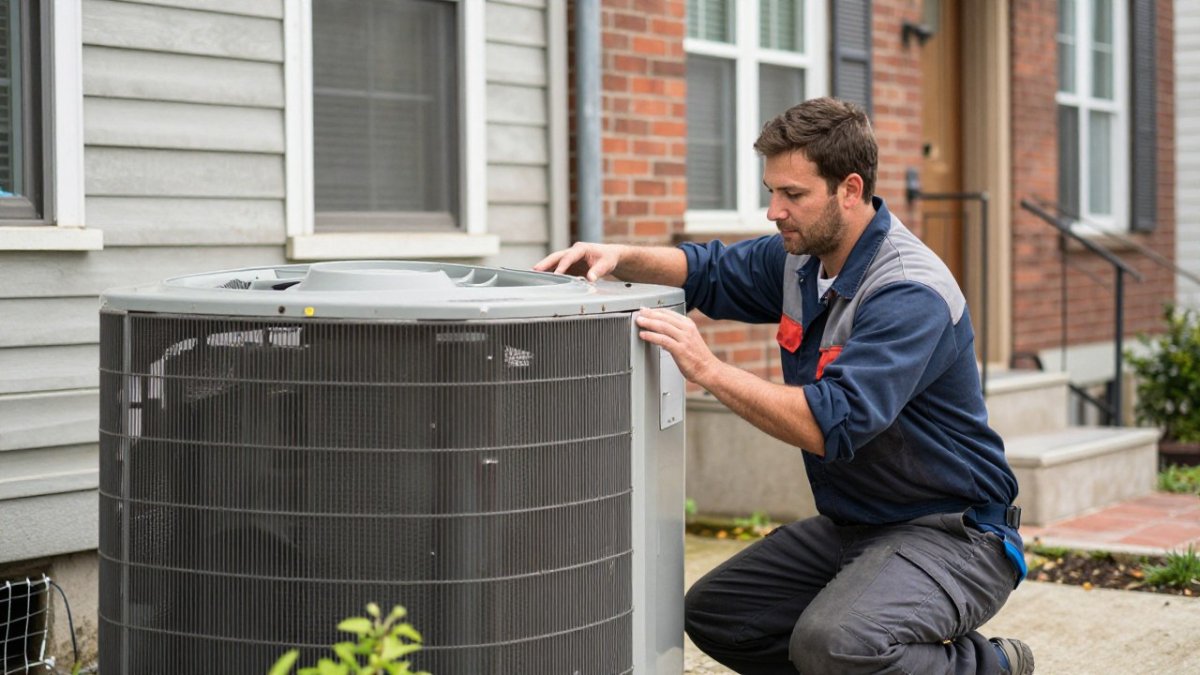
Start with a realistic installed-cost range. Installed cost varies with equipment size, home layout, ductwork condition, electrical panel capacity, and installer. Rather than quote a single figure, ask each contractor for a line-item quote that separates equipment, labor, electrical work, and any duct or line-set modifications. The electrical panel upgrade, which is sometimes needed for a cold-climate heat pump, can be a significant line item, so ask each contractor to show it separately. Get at least two itemized quotes so you can see which costs are real and which are padded.
Then subtract only confirmed incentives, in this order:
- Manufacturer or contractor promotions, usually applied at the point of sale, so they reduce the invoice directly.
- DCSEU residential rebate, the $250-$5,000 range, or the $1,000-$1,500 electric-resistance replacement amount, depending on your equipment and existing system. Confirm the exact figure for your model before you subtract it.
- Utility or income-qualified assistance, only if you have been approved; do not net an unapproved program against your budget.
- Federal incentives, only if the program is open and accepting applications for your situation. Treat any federal amount as zero until you have written confirmation that the program is open for your situation.
Stacking rules that prevent double-counting. A practical rule: the same dollar of project cost generally cannot be paid for twice by two programs. In practice that means:
- A DCSEU rebate and an income-qualified rebate often cannot both be claimed on the same measure, pick the larger one and confirm with DCSEU.
- Manufacturer promotions usually stack with DCSEU rebates because they come from different parties, but read the terms; some promotions exclude units that also receive a utility rebate.
- Federal tax credits (where available) are claimed on your return and generally do not reduce the rebate amount, but they may be capped by project cost, keep every invoice.
- Rebates that require pre-approval must be applied for before installation; installing first can disqualify you from the entire amount.
A worked example of the math (illustrative, not a quote). Suppose an itemized installed price for a heat pump, less only the incentives you have confirmed in writing, leaves a net out-of-pocket amount. The lesson is to net only confirmed numbers.
Documents to keep for every dollar you claim: the itemized invoice, the equipment model and serial numbers, proof of installation (permit or contractor sign-off), and any pre-approval letter. Programs may audit; keep complete paperwork in case a confirmed rebate is reviewed.
For a broader view of how tax credits and utility rebates fit together, see Solar Tax Credits and Incentives Explained for Homeowners. A reader comparing net installation costs against payback periods may also find Residential Solar Panel System Cost Breakdown useful.
The table below lists the figures the article gives for netting out your cost after rebates.
| Item | Value | Note |
|---|---|---|
| DCSEU residential rebate (standard) | $250-$5,000 | Depends on equipment and existing system |
| DCSEU electric-resistance replacement | $1,000-$1,500 | Depends on equipment and existing system |
| Rebate order: first subtract | Manufacturer or contractor promotions | Usually applied at point of sale |
| Rebate order: then subtract | DCSEU residential rebate | Confirm exact figure for your model |
| Documents to keep | Invoice, model and serial numbers, proof of installation | Needed for every dollar claimed |
Step-by-Step Application Checklist and Stacking Rules
Use this sequence to avoid losing a rebate:
- Confirm program status with DCSEU before you sign anything.
- Check that your chosen equipment is on the qualifying list.
- Get at least two written quotes that itemize the equipment and labor.
- Ask the installer to confirm the work meets the program's requirements.
- Submit your rebate application and keep copies of every document.
- Keep the invoice, the equipment model and serial numbers, and proof of installation.
Watch out: many rebates require approval or pre-registration before installation begins. Installing first can disqualify you, so confirm the order of steps in writing.
Confirming Your Heat Pump Incentives Before You Sign a Contract
Before you sign, get the rebate terms in writing from the program, not only from the installer. Installer marketing often quotes the maximum figure, and the amount you actually receive can be lower.
Ask the installer to name the specific rebate, state the expected amount, and confirm which party handles the paperwork. If the contract does not mention the incentive, ask for it to be added.
For help vetting the people doing the work, read What Credentials Should a Solar Installer Have?. The same questions apply to heat pump contractors, since the installer's qualifications can affect whether your work qualifies for a rebate. For a side-by-side look at competing bids, see How to Compare Solar Quotes: A Step-by-Step Guide.
Get your heat pump incentive questions answered before you commit. Go Solar DMV helps DMV homeowners compare quotes and understand what applies to their home. Start with a clear picture of your net cost, then decide what to do next.
Frequently Asked Questions
Is the federal heat pump tax credit still available in 2026?
The federal residential clean-energy tax credit for heat pumps has changed, and local rebates are now a major source of savings for many households. Because federal rules and deadlines can shift, check the current status with the IRS and a tax professional before you buy. For DC homeowners, the DC Sustainable Energy Utility (DCSEU) rebates for qualifying electric heat pumps are a separate program. Confirm current amounts and deadlines directly with DCSEU.
Who is eligible for DC heat pump rebates?
Eligibility for DCSEU rebates depends on the program's current terms, so check whether your household qualifies. Rebates apply to qualifying equipment, so the specific heat pump model and installation must meet program requirements. Income-qualified federal Home Energy Rebates are a separate track; check with the administering agency for current availability. Verify your eligibility with DCSEU before purchasing equipment.
Can I combine a DC heat pump rebate with other incentives?
Stacking rules depend on each program's terms, so you cannot assume that a DCSEU rebate and a federal incentive can both be applied to the same purchase. Ask each program whether it allows combined funding and whether the same costs can be claimed twice. Keep copies of invoices and equipment specifications for every application. Confirming these rules before you sign a contract helps you avoid losing a rebate after installation.
How do I apply for a DCSEU heat pump rebate?
Start by confirming that your chosen heat pump and installer meet DCSEU's current requirements on the official program page. Gather your equipment specifications, the installer's invoice, and proof of your DC residence. Submit the rebate application according to the instructions on DCSEU's website, and keep copies of everything you send. Processing times and funding availability can change, so check the program status before scheduling installation.
