Signs Your Solar Panels Need Professional Repair
Last Updated: November 10, 2026
Quick Summary
The most common signs that your solar panels need repair are a sustained drop in energy output that weather does not explain, recurring inverter fault codes, visible physical damage like cracked glass, and any burning smell, sparking, or exposed wiring. Solar panels repair is urgent when electrical or fire-safety signs appear, and it can wait days or weeks for cosmetic or output-only issues.
- Compare this month's output with the same month last year, adjusting for weather before assuming a fault.
- Restart the monitoring device or router first, and call a professional if an alert repeats after a restart.
- Do not climb onto the roof or open the inverter, junction box, or wiring compartments.
- Shut the system down at the disconnect switch and call a licensed professional if you smell burning or see sparking.
- Gather monitoring screenshots, damage photos, and warranty paperwork before requesting a repair quote.
Table of Contents
- Why Solar Panel Repair Signs Are Easy to Miss
- Reduced Energy Production and Unexplained Bill Increases
- Inverter Alerts, Monitoring App Errors, and Communication Gaps
- Visible Damage: Cracked Glass, Burn Marks, and Shifted Mounts
- Electrical Warning Signs That Need Immediate Attention
- Solar Panel Maintenance Checklist: What You Can Check Safely
- Signs Solar Panels Need Professional Repair: Cost and Timing Factors
- Finding Solar Panel Repair Near Me and Preparing for Service
- Frequently Asked Questions
Why Solar Panel Repair Signs Are Easy to Miss
Solar panels rarely fail in a dramatic way, and a solar panels repair need often creeps in slowly. Many homeowners only notice the problem months later on a utility bill. Knowing the warning signs helps you act before a small fault becomes an expensive one.
A key point to remember: a drop in output does not always mean something is broken. A significant drop in production efficiency can indicate a potential issue, but other factors can cause a dip too. Learn how to measure whether your system is performing below its rated output.
- Lower energy output than usual for the same season
- A monitoring app that shows errors or missing data
- Physical changes you can see from the ground or a window
- Electrical smells, unusual sounds, or warning lights
Reduced Energy Production and Unexplained Bill Increases
Lower production is often the first clue. Compare your system's output this month with the same month last year, adjusting for weather.
Your utility bill can also reveal trouble. If your electricity bill rises even though your household use has not changed, check your production data.
- Check the same months year over year, not just last week
- Note cloudy or rainy stretches before you call anyone
- Look for shading from trees that have grown taller
Weather alone can lower output, so do not assume a repair is needed right away. Learn how cloudy weather affects solar panel performance. Rule out the simple causes first.
Inverter Alerts, Monitoring App Errors, and Communication Gaps
The inverter converts the panels' direct current into usable household power. When it shows an error or fault code, treat that as a real signal. Many systems send alerts to a monitoring app, so check it regularly.
Communication problems can also hide a real fault. If the app stops showing per-panel data, the system may still be running, but you cannot see what it is doing. See what live monitoring shows on your phone.
- Note any inverter fault code and the date it appeared
- Restart the monitoring device or router if data stops updating
- Call a professional if an alert repeats after a restart
Visible Damage: Cracked Glass, Burn Marks, and Shifted Mounts
Physical damage is often the easiest sign to see when you plan solar panels repair. Look for cracked or chipped glass, discolored or scorched areas, and panels that sit at an odd angle.
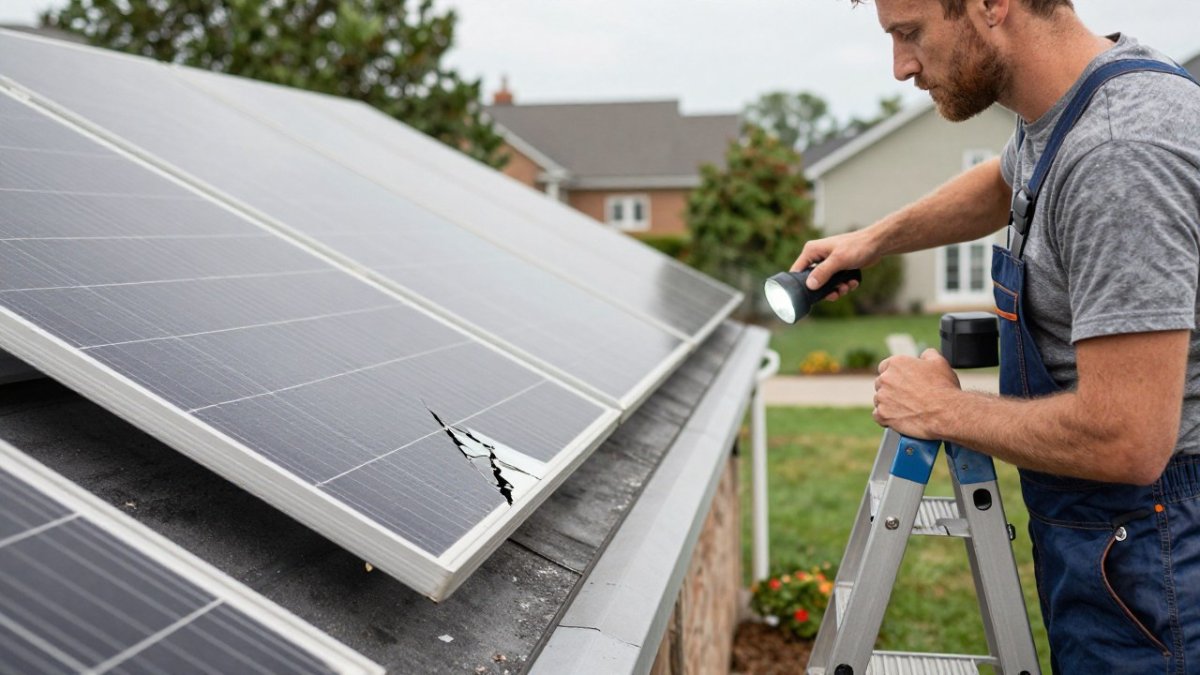
Shifted mounts are less obvious. A panel that has moved on its rails can strain the wiring and reduce output. Never climb onto a roof to inspect this yourself. Photograph what you see from the ground, then ask a qualified technician to take a closer look.
- Cracked or broken glass, even a small chip
- Burn marks or dark discoloration on the panel surface
- Panels that look tilted, loose, or out of line
Electrical Warning Signs That Need Immediate Attention
Some electrical signs are urgent. A burning smell, sparking, a buzzing sound from the inverter or wiring, or a hot junction box can point to a fire risk. If you notice any of these, shut the system down using the disconnect switch if it is safe to reach, and contact a licensed professional right away.
For a less urgent check, you can measure output with a multimeter, but only if you have training.
- Burning smell or melted plastic near the equipment
- Arcing, sparks, or a crackling sound
- Breakers that trip repeatedly
- Loose or discolored wire connections
Solar Panel Maintenance Checklist: What You Can Check Safely
Most homeowners can safely perform a handful of checks without climbing on the roof or opening any electrical equipment. The goal is to gather evidence, not to diagnose or repair. Use this checklist to document what you see, then hand that record to a qualified technician.
Safe homeowner checks (no roof access, no electrical work):
- Open your monitoring app and note any active alerts, fault codes, or gaps in per-panel data. Record the date and time each alert appeared.
- Compare this month's production with the same month last year, adjusting for known weather differences. Write down the percentage change if the app provides it.
- From the ground, inspect the array with binoculars for cracked glass, dark discoloration, bird droppings, or panels sitting at an odd angle.
- Look for new shade sources, tree growth, new construction, or debris, that could affect specific panels.
- Check the inverter display or app for error codes. Photograph the screen if a code is showing.
- Note any unusual sounds (buzzing, humming, clicking) or smells near the inverter or wiring, and the conditions when they occur.
- Confirm that the system's disconnect switch is clearly labeled and accessible, but do not operate it unless instructed by a professional.
What not to do:
- Do not climb onto the roof. Falls are the leading cause of homeowner injury during solar maintenance, and roof surfaces can be slippery or fragile.
- Do not open the inverter, junction box, or any wiring compartment. These contain live DC and AC circuits that remain energized even when the system is not producing.
- Do not attempt to clean panels with a pressure washer, abrasive pad, or harsh chemical. High-pressure water can force moisture past seals, and abrasives can scratch the glass or anti-reflective coating.
- Do not remove or tighten mounting hardware. Torque specifications matter, and improper tightening can void warranties or create roof leaks.
Documentation to gather before calling a professional:
Repairs tend to go faster when the homeowner arrives with a clear record. Before you call, collect:
- Screenshots of monitoring alerts and production graphs from the past 30-90 days
- Photos of any visible damage, taken from the ground or a safe window
- The date you first noticed each symptom and whether it has worsened
- Your system's installation date, equipment model numbers, and inverter serial number (usually on a label inside the inverter cover or on your contract)
- Any warranty paperwork or service contract that may cover the issue
When to stop and call a technician:
Stop your inspection and contact a licensed solar professional immediately if you see smoke, smell burning, notice exposed wiring, hear arcing or crackling, or find that a breaker trips repeatedly. These are urgent electrical or fire-safety signs.
Consumer safety guidance for home electrical systems
Signs Solar Panels Need Professional Repair: Cost and Timing Factors
Repair costs depend on the underlying problem, which can range from a loose connector to a failed inverter or a damaged roof mount.
What a diagnostic visit typically covers:
A diagnostic visit generally involves the following steps:
- Review your monitoring data and any alerts you recorded, then compare against the system's expected production for the season.
- Perform a visual inspection of the array from the roof and ground, checking for cracked glass, hotspots, shading, and mounting issues.
- Test string voltage and current at the inverter or combiner box to isolate whether the fault is in a panel, a string, or the inverter itself.
- Inspect wiring, connectors, and junction boxes for corrosion, loose terminations, or heat damage.
- Check the inverter's event log and firmware status, and confirm communication with the monitoring platform.
- Provide a written findings report with recommended repairs and a quote.
Factors that affect repair cost:
- Component type: The specific component that has failed largely determines the repair scope.
- Access and labor: Roof pitch, height, and the need for specialized equipment can affect labor time.
- System age and parts availability: Older systems may use parts that are no longer available, which can affect whether a repair or replacement is recommended.
- Warranty status: Review your warranty documents to see whether parts or labor may be covered before authorizing work.
- Diagnostic fee: Ask about any diagnostic fee and whether it is credited toward the repair before booking.
Warranty, insurance, and service-contract considerations:
Before you authorize any repair, gather your paperwork.
Timing guidance:
- Immediate: Smoke, burning smells, sparking, exposed wiring, or repeated breaker trips. Shut down the system at the disconnect switch if it is safe to reach, and call a licensed professional.
- Within days to weeks: A repeating inverter fault, a steady production drop that weather does not explain, or visible damage that is not causing a safety hazard.
- Routine scheduling: Dirt buildup, minor cosmetic wear, or a single low-performing panel that monitoring has flagged but that is not affecting overall output significantly.
Because pricing depends on the specific fault and your equipment, request a written quote after the diagnostic visit rather than relying on phone estimates.
Solar consumer protection and warranty guidance
The table below summarises the timing guidance for deciding how quickly to act on a problem.
| Situation | Action | Timing |
|---|---|---|
| Smoke, burning smell, or sparking | Shut down at the disconnect switch if safe, then call a licensed professional | Immediate |
| Exposed wiring or repeated breaker trips | Call a licensed professional right away | Immediate |
| Repeating inverter fault | Schedule a service visit | Within days to weeks |
| Steady production drop weather does not explain | Schedule a service visit | Within days to weeks |
| Visible damage with no safety hazard | Schedule a service visit | Within days to weeks |
| Dirt buildup or minor cosmetic wear | Schedule routine service | Routine scheduling |
| Single low-performing panel with no significant output loss | Schedule routine service | Routine scheduling |
Finding Solar Panel Repair Near Me and Preparing for Service
When you search for solar panel repair near me, choose a provider with licensed technicians who know your system type. Compare solar companies near you on cost, warranties, and reviews.
Before the visit, gather your monitoring data, photos of any damage, your system's installation records, and any warranty paperwork.
Once you have a repair plan, stay on top of your monitoring app so you catch the next issue early. A few minutes each month can prevent a much larger bill later.
Stop guessing about your system's health.
Frequently Asked Questions
What is the typical lifespan of a solar panel?
Most solar panels are designed to operate for 25 to 30 years, and many manufacturers warrant a minimum output level over that period. Normal degradation is gradual, so a small annual decline in output is expected. A sudden drop, visible damage, or output falling well below your system's historical baseline is a different matter and warrants an inspection. Check your performance warranty terms and your monitoring history to tell normal aging from a fault that needs a qualified technician.
How much does it cost to repair a solar panel?
Repair costs depend on the fault, system size, access to the roof, and whether a single module, an inverter, or wiring is involved. Go Solar DMV has not published repair pricing, so costs cannot be quoted here. For current pricing or a site-specific estimate, contact Go Solar DMV through its website. If your system is under a manufacturer or installer warranty, a covered repair may cost you nothing, so check those terms before paying for service.
Is it safe to troubleshoot solar panels yourself?
Checking your monitoring app, reviewing inverter status lights, looking for debris, and photographing visible damage from the ground are safe steps for most homeowners. Opening electrical enclosures, handling wiring, or walking on a roof with panels is not. Solar arrays carry live DC voltage even when the inverter is off, so any burn smell, arcing, or exposed wiring should prompt you to shut the system down if you can do so safely and call a qualified technician.
How often should solar panels be inspected?
Many homeowners schedule a professional inspection every one to two years, and sooner after severe weather such as hail, high winds, or heavy snow. Between visits, review your production data monthly and compare it with the same period in prior years, adjusting for weather. Consistent drops in output, new inverter alerts, or monitoring gaps are reasons to request service before the next scheduled inspection.
